Bad ideas, like death, are inevitable and just as inescapable.
The US-based tech industry is a Pandora’s box of bad ideas, unleashed upon an unwilling and unwitting populace, and indeed world, with reckless abandon, scorching lives and the Earth itself. Never mind, they say, we’re building the future.
The latest bad idea to spread dark wings and take flight is that building a super massive data center for ‘AI’ called ‘Stargate’- a megamachine that will solve all our problems like a resource and real estate devouring Wizard of Oz – is not only good, but essential.
WASHINGTON (AP) — President Donald Trump on Tuesday talked up a joint venture investing up to $500 billion for infrastructure tied to artificial intelligence by a new partnership formed by OpenAI, Oracle and SoftBank.
The new entity, Stargate, will start building out data centers and the electricity generation needed for the further development of the fast-evolving AI in Texas, according to the White House. The initial investment is expected to be $100 billion and could reach five times that sum.
“It’s big money and high quality people,” said Trump, adding that it’s “a resounding declaration of confidence in America’s potential” under his new administration.
Microsoft and OpenAI are reportedly working on a massive datacenter to house an AI-focused supercomputer featuring millions of GPUs. The Information reports that the project could cost “in excess of $115 billion” and that the supercomputer, currently dubbed “Stargate” inside OpenAI, would be U.S.-based.
The report says that Microsoft would foot the bill for the datacenter, which could be “100 times more costly” than some of the biggest operating centers today. Stargate would be the largest in a string of datacenter projects the two companies hope to build in the next six years, and executives hope to have it running by 2028.
[…]
Bad ideas are inevitable but also, apparently, subject to cost overruns.
There are many ways to think and talk about this project, which is certain to fail (and there is news of far less costly methods, making the Olympian spending even more obviously suspicious). For me, the clearest way to understand the Stargate project and in fact, the entire ‘AI’ land grab, is as an attempt to create guaranteed profit for those tech firms who’re at the commanding heights – Microsoft, OpenAI, Amazon, Oracle and co-conspirators. Capital will flow into these firms whether the system works as advertised or not – i.e. they are paid for both function (such as it is) and malfunction.
This isn’t a new technique. The US defense industry has a long history of stuffing its coffers with cash for delivering weapons systems that work… sometimes. The most infamous example is Lockheed’s F-35 fighter, a project that provides the company with funding for both delivery and correction as described in the US Government Accounting Office article, ‘F-35 Joint Strike Fighter: More Actions Needed to Explain Cost Growth and Support Engine Modernization Decision’ May 2023 –
The Department of Defense’s most expensive weapon system—the F-35 aircraft—is now more than a decade behind schedule and $183 billion over original cost estimates.
[…]
That’s a decade and 183 billion of sweet, steady profit, the sort of profit the tech industry has long sought. First there was ‘enterprise software’, then there was subscription-based cloud, both efforts to create ‘growth’ and dependable cash infusions. Now, with Stargate, the industry may have, at last, found its F-35. Unlike the troubled fighter plane, there won’t be any Tom Cruise films featuring the data center. Then again, perhaps there will be. Netflix, like the rest of the industry, is out of ideas.
In part one of this series, I proposed that Trump’s second term, which, as we’re seeing with the rush of executive orders, has, unlike his first, a coherent agenda (centered on the Heritage Foundation’s Project 2025 plan), would be a time of increased aggression against ostracized individuals and groups, a state of exception in which the pretence of bourgeois democracy melts away.
Because of this, we should change our relationship with the technologies we’re compelled to use; a naive belief in the good will or benign neglect of tech corporations and the state should be abandoned. The correct perspective is to assume breach.
In a April, 2023 published blog post for the network equipment company, F5, systems security expert Ken Arora, described the concept of assume breach:
Plumbers, electricians, and other professionals who operate in the physical world have long internalized the true essence of “assume breach.” Because they are tasked with creating solutions that must be robust in tangible environments, they implicitly accept and incorporate the simple fact that failures occur within the scope of their work. They also understand that failures are not an indictment of their skills, nor a reason to forgo their services. Rather, it is only the most skilled who, understanding that their creations will eventually fail, incorporate learnings from past failures and are able to anticipate likely future failures.
[…]
For the purposes of this essay, the term, failure, is re-interpreted to mean the intrusion of hostile entities into the systems and devices you use. By adopting a technology praxis based on assumed breach, you can plan for intrusion by acknowledging the possibility that your systems have, or will be penetrated.
Primarily, there are five areas of concern:
Phones
Social Media
Personal computers
Workplace platforms, such as Microsoft 365 and Google’s G-Suite
‘Cloud’ platforms, such as Microsoft Azure, Amazon AWS and Google Cloud Platform
It’s reasonable to think that following security best practices for each technology (links in the references section) offers a degree of protection from intrusion. Although this may be true to some extent, when contending with non-state hostiles, such as black hat hackers, state entities have direct access to the ownership of these systems, giving them the ability to circumvent standard security measures via the exercise of political power.
Phones (and tablets)
Phones are surveillance devices. No communications that require security and which, if intercepted, could lead to state harassment or worse should be done via phones. This applies to iPhones, Android phones and even niche devices such as Linux phones. Phones are a threat in two ways:
Location tracking – phones connect to cellular networks and utilize unique identifiers that enable location and geospatial tracking. This data is used to create maps of activity and associations (a technique the IDF has used in its genocidal wars)
Data seizure – phones store data that, if seized by hostiles, can be used against you and your organization. Social media account data, notes, contacts and other information
Phone use must be avoided for secure communications. If you must use a phone for your activist work, consider adopting a secure Linux-based phone such as GrapheneOS which may be more resistant to cracking if seized but not to communication interception. As an alternative, consider using old school methods, such as paper messages conveyed via trusted courier within your group. This sounds extreme and may turn out to be unnecessary depending on how conditions mutate. It is best however, to be prepared should it become necessary.
Social Media
Social media platforms such as Twitter/X, Bluesky, Mastodon, Facebook/Meta and even less public systems such as Discord, which enables the creation of privately managed servers, should not be used for secure communication. Not only because of posts, but because direct messages are vulnerable to surveillance and can be used to obtain pattern and association data. A comparatively secure (though not foolproof) alternative is the use of the Signal messaging platform. (Scratch that: Yasha Levine provides a full explantation of Signal as a government op here).
Personal Computers
Like phones, personal computers -laptops and Desktops – should not be considered secure. There are several sub-categories of vulnerability:
Vulnerabilities caused by security flaws in the operating system (for example, issues with Microsoft Windows or Apple MacOS)
Vulnerabilities designed into the operating systems by the companies developing, deploying and selling them for profit objectives (Windows CoPilot, is a known threat vector, for example)
Vulnerabilities exploited by state actors such as intelligence and law enforcement agencies (deliberate backdoors)
Data exposure if a computer is seized
Operating systems are the main threat vector – that is, opening to your data – when using a computer. In part one of this series, I suggested abandoning the use of Microsoft Windows, Google Chrome OS and Apple’s Mac OS for computer usage that requires security and using secure Debian Linux instead. This is covered in detail in part one.
Workplace Platforms such as Google G-Suite and Microsoft 365 and other ‘cloud’ platforms such Microsoft Azure and Amazon Web Services
Although convenient, and, in the case of Software as a Service offerings such as Google G-Suite and Microsoft 365, less technically demanding to manage than on-premises hosting, ‘cloud’ platforms should not be considered trustworthy for secure data storage or communications.
This is true, even when platform-specific security best practices are followed because such measures will be circumvented by the corporations that own these platforms when it suits their purposes – such as cooperating with state mandates to release customer data.
The challenge for organizations who’re concerned about state sanctioned breach is finding the equipment, technical talent, will and organizational skill (project management) to move away from these ‘cloud’ systems to on-premises platforms. This is not trivial and has so many complexities that it deserves a separate essay, which will be part three of this series.
The primary challenges are:
Inventorying the applications you use
Assessing where the organisation’s data is stored and the types of data
Assessing the types of communications and the levels of vulnerability (for example, how is email used? What about collaboration services such as SharePoint?)
Crafting an achievable strategy for moving applications, services and data off the vulnerable cloud service
Encrypting and deleting data
…
In part three of this series, I will describe moving your organisation’s data and applications off of cloud platforms: what are the challenges? What are the methods? What skills are required? I’ll talk about this and more.
In his 2005 published book, State of Exception, Italian philosopher Giorgio Agamben (who, I feel moved to say, was an idiot on the topic of Covid 19, declaring the virus to be nonexistent) wrote:
“The state of exception is the political point at which the juridical stops, and a sovereign unaccountability begins; it is where the dam of individual liberties breaks and a society is flooded with the sovereign power of the state.”
The (apparently, merely delayed by four years) re-election of Donald Trump is certain to usher in a sustained period of domestic emergency in the United States, a state of exception when even the pretense of bourgeois democracy is dropped and state power is exercised with few restraints.
What does this mean for information technology usage by activist groups or really, anyone?
…
In Feb of 2024, I published the essay, Information Technology for Activists – What is To Be Done? In this essay, I provided an overview of the current information technology landscape, with the needs and requirements of activist groups in mind. When conditions change, our understanding should keep pace. As we enter the state of exception, the information technology practices of groups who can expect harassment, or worse, from the US state should be radically updated for a more aggressively defensive posture.
Abandon Cloud
The computer and software technology industry is the command and control apparatus of corporate and state entities. As such, its products and services should be considered enemy territory. Under the capitalist system, we are compelled to operate on this territory to live. This harsh necessity should not be confused with acceptance and is certainly not a reason to celebrate, like dupes, the system that is killing the world.
The use of operating systems and platforms from the tech industry’s primary powers – Microsoft, Amazon, Google, Meta, X/Twitter, Apple, Oracle – and lesser known entities, creates a threat vector through which identities, data and activities can be tracked and recorded. Moving off these platforms will be very difficult but is essential. What are the alternatives?
There are three main areas of concern:
Services and platforms such as social media, cloud and related services
Personal computers (for example, laptops)
Phones
In this essay, cloud and computer usage are the focus.
By ‘cloud’, I’m referring to the platforms owned by Microsoft (Azure), Amazon (Amazon Web Services or, AWS) and Google (Google Cloud Platform or GCP) and services such as Microsoft 365 and Google’s G Suite. These services are not secure for the purposes of activist groups and individuals who can expect heightened surveillance and harassment from the state. There are technical reasons (Azure, for example, is known for various vulnerabilities) but these are of a distant, secondary concern to the fact that, regardless of each platform’s infrastructural qualities or deficits, the corporations owning them are elements of the state apparatus.
Your data and communications are not secure. If you are using these platforms, your top priority should be abandoning usage and moving your computational resources to what are called on-premises facilities and use the Linux operating system, rather than MacOS or Microsoft Windows.
On Computers
In brief, operating systems are a specialized type of software that makes computers useful. When you open Microsoft Excel on your computer, it’s the Microsoft Windows operating system that enables the Excel program to utilize computer hardware, such as memory and storage. You can learn more about operating systems by reading this Wikipedia article. This relationship – between software and computing machinery – applies to all the systems you use: whether it’s Windows, Mac or others.
Microsoft Windows (particularly the newest versions which include the insecure by design ‘Co-pilot plus PC’ feature) and Apple’s MacOS should be abandoned. Why? The tech industry, as outlined in Yasha Levine’s book, Surveillance Valley, works hand in glove with the surveillance state (and has done so since the industry’s infancy). If you or your organization are using computers for work that challenges the US state – for example, pro-Palestinian activism or indeed, work in support of any marginalized community, there is a possibility vital information will be compromised – either through seizure, or remote access that takes advantage of backdoors and vulnerabilities.
This was always a possibility (and for some, a harsh experience) but as the state’s apparatus is directed towards coordinated, targeted suppression, vague possibility turns into high probability (see, for example, UK police raid home, seize devices of EI’s Asa Winstanley).
The Linux operating system should be used instead, specifically, the Debian distribution, well known for its secure design. Secure by design does not mean invulnerable to attack; best practices such as those described in the article, Securing Debian Manual 3.19, on the Debian website, must be followed to make a machine a harder target.
Switching and Migration
Switching from Microsoft Windows to Debian Linux can be done in stages as described in the document ‘From Windows to Debian’. Replacing MacOS with Debian on Mac Pro computers is described in the document, ‘Macbook Pro’ on the Debian website. More recent Mac hardware (M1 Silicon) is being addressed via Debian’s Project Banana.
On software
If you’re using Microsoft Windows, it’s likely you’re also using the MS Office suite. You may also be using Microsoft’s cloud ‘productivity’ platform, Microsoft 365. Perhaps you’re using Google’s Workspace platform instead or in addition to Microsoft 365. In the section on ‘Services and Platforms’, I discuss the problems of these products from a security perspective. For now, let’s review replacements for commercial ‘productivity’ suites that are used to create documents, spreadsheets and other types of work files.
In the second installment of this essay series I will provide greater detail regarding each of the topics discussed and guidance about the use of phones which are spy devices and social media, which is insecure by design.
Unless you’ve been under a rock, and probably, even if you have, you’ve noticed that ‘AI’ is being promoted as the solution to everything from climate change to making tacos. There’s an old joke: how do you know when a politician is lying? Their mouth is moving. Similarly, anytime businesses relentlessly push something, the first question that should come to mind is: how are they trying to make money?
Microsoft, in particular, has, as the saying goes, gone all in rebranding its implementation of OpenAI’s ChatGPT large language model based products as CoPilot, embedded across Microsoft’s catalog. Leaving aside, for the sake of this essay, the question of what so-called AI actually is, (hint: statistics) considering this push, it’s reasonable to ask: what is going on?
Ideology certainly plays a role
That is, the belief (or at least, the assertion) of a loud segment of the tech industry that they are building Artificial General Intelligence – a successor to humanity, genuinely thinking machines
Ideology is an important factor but it’s more useful to place technology firms such as Microsoft back within capitalism in our thinking. This is a way to reject the diversions this sector uses to obscure that fact
To do this, let’s consider Vladimir Lenin’s theory of imperialism as expressed in his essay, ‘Imperialism the highest stage of capitalism’.
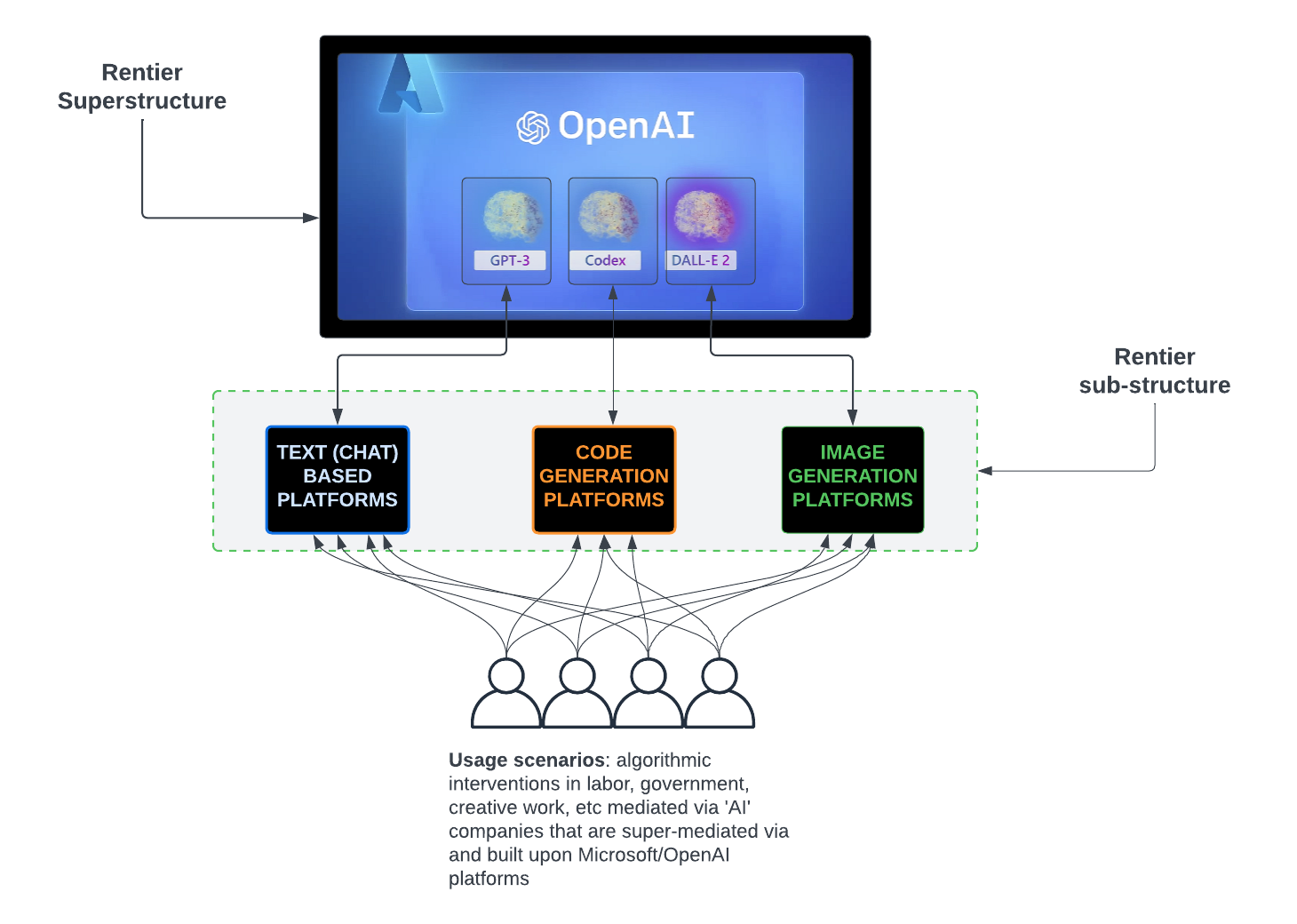
In January of 2023, I published an essay to my blog titled, ChatGPT: Super Rentier.
The thesis of that essay is that Microsoft’s partnership with, and investment in, OpenAI and the insertion of OpenAI’s large language model software, known as ChatGPT into Microsoft’s product catalog, was done to create a platform Microsoft would use to make it a kind of super rentier – or, super landlord – of AI systems. Others, sub-rentiers, would build their platforms using Microsoft’s platform as the backend making it the super rentier – the landlord of landlords.
With this in mind, let’s take a look at this visualization of Lenin’s concept of imperialism I cooked up:
For me, the key element is the relationship between the tendency towards monopoly which leads to stagnation (after all, what’s the incentive to stay sharp if you control a market?) and the expansion of capitalist activity to other, weaker territories to temporarily resolve this stagnation – this is the material motive for capitalist imperialism or as Lenin also phrased it, parasitism.
Let’s apply this theory to Microsoft and its push for AI everywhere:
Microsoft, as a software firm, once derived most of its profit from selling products such as SQL Server, Exchange Server and the Office Suite.
This became a near monopoly for Microsoft as it dominated the corporate market for these and other types of what’s known as enterprise applications.
This monopoly led to stagnation – how many different ways can you try to derive profit from Microsoft Office, for example? By stagnation, I don’t mean that Microsoft did not make money or profit from its dominance, but this dominance no longer supported the growth capitalists demand.
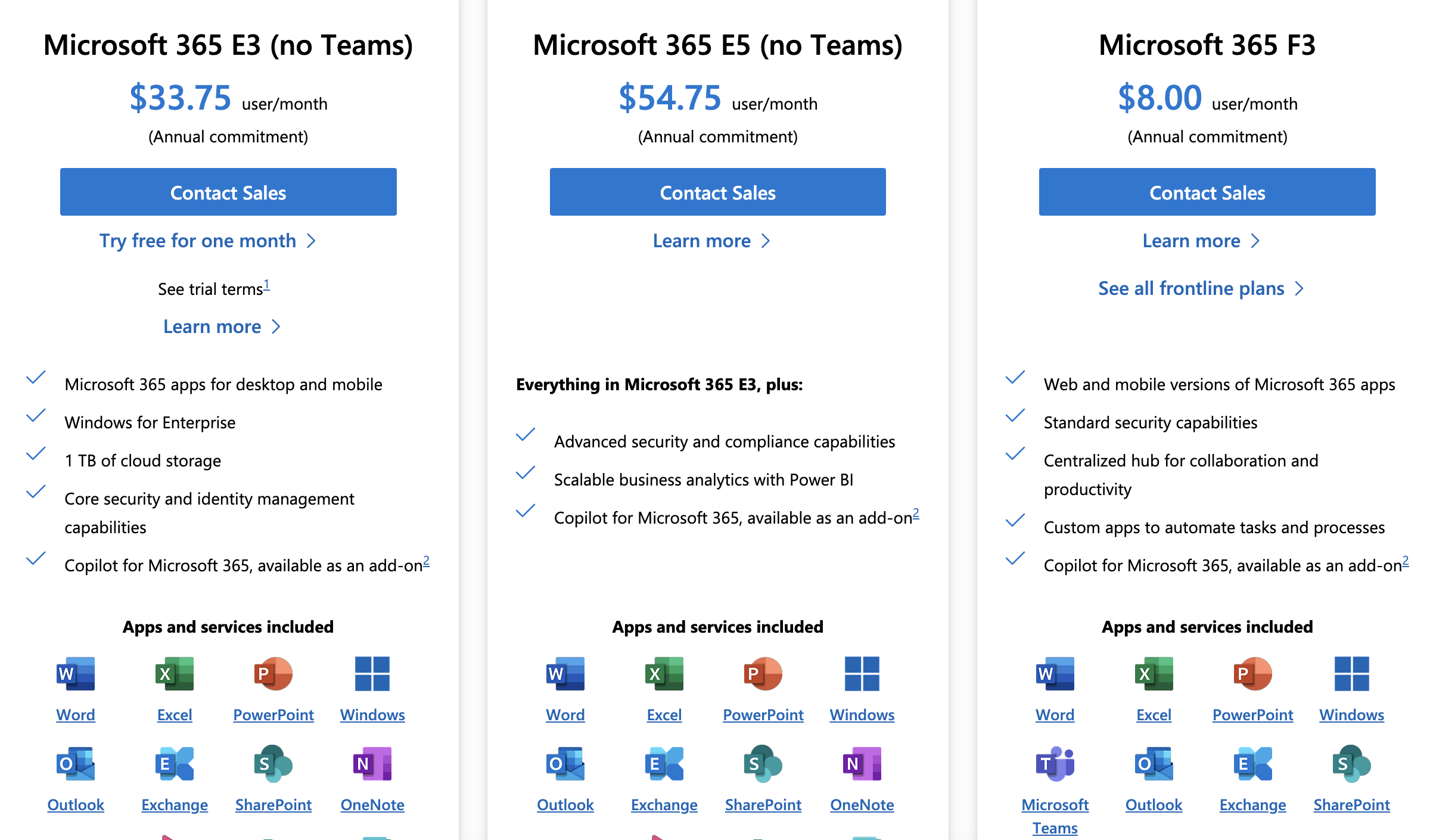
The answer, for a time, was the subscription model of the Microsoft 365 platform which moved corporations from a model in which products such as Exchange would be hosted in-house in corporate data centers and licensed, to one in which there was a recurring charge for access and guaranteed revenue stream for Microsoft.
No longer was it possible for a company to buy a copy of a product and use it even after licensing expired. Now, you have to pay up, routinely, to maintain access.
After a time, even this led to a near monopoly and the return of stagnation as the market for expansion was saturated
Into this situation, enter ‘AI’
By inserting AI – chatbots and image generators into every product and pushing for this to be used by its corporate customers, Microsoft is enacting a form of the imperialist expansion Lenin described – it is a colonization of business process, education, art, filmmaking science and more on an unprecedented scale
But what haunts the AI push is the very stagnation it is supposed to remedy
There is no escape from the stagnation caused by monopoly, only temporary fixes which merely serve to create the conditions for future decay and conflict.
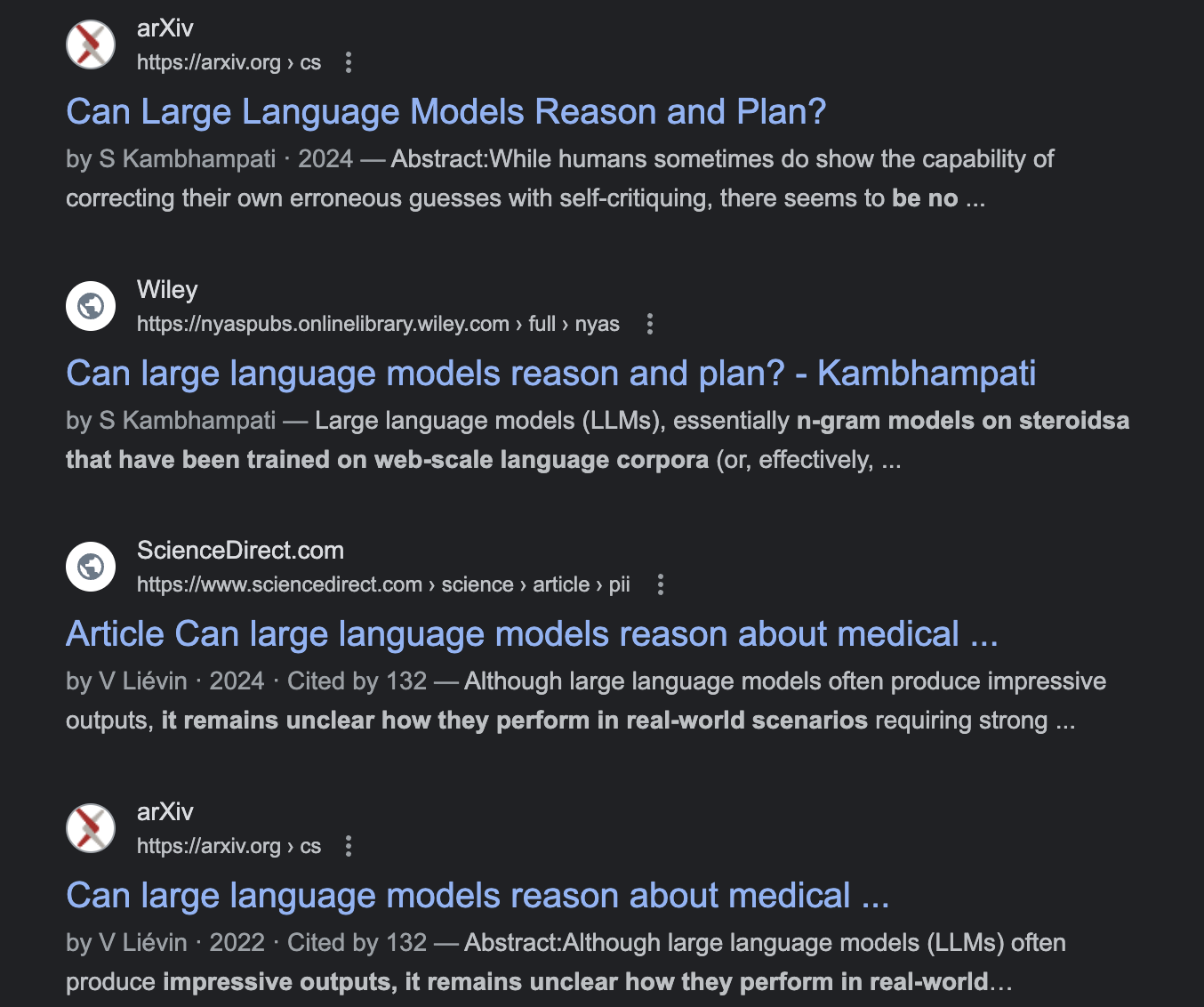
This is a hotly debated topic in so-called ‘tech’ circles and the academic and media groups that orbit that world like one of Jupiter’s radiation blasted moons. I dropped the phrase, ‘can large language models reason’ into Google, (that rusting machine) and got this result:
This is only a small sample. According to Google there are “About 352.000.000 results.” We can safely conclude from this, and the back and forth that endlessly repeats on Twitter in groups that discuss ‘AI’ that there is a lot of interest in arguing the matter: pro and con. Is this debate, if indeed it can be called that, the least bit important? What is at stake?
***
According to ‘AI’ industry enthusiasts, nearly everything is at stake; a bold new world of thinking machines is upon us. What could be more important? To answer this question, let’s do another Google search, this time, for the phrase, Project Nimbus:
The first result returned was a Wikipedia article, which starts with this:
Project Nimbus (Hebrew: פרויקט נימבוס) is a cloud computing project of the Israeli government and its military. The Israeli Finance Ministry announced in April 2021, that the contract is to provide “the government, the defense establishment, and others with an all-encompassing cloud solution.” Under the contract, the companies will establish local cloud sites that will “keep information within Israel’s borders under strict security guidelines.”
What sorts of things does Israel do with the system described above? We don’t have precise details but there are clues such as what’s described in this excerpt from the +972 Magazine article, ‘A mass assassination factory’: Inside Israel’s calculated bombing of Gaza’ –
According to the [+972 Magazine] investigation, another reason for the large number of targets, and the extensive harm to civilian life in Gaza, is the widespread use of a system called “Habsora” (“The Gospel”), which is largely built on artificial intelligence and can “generate” targets almost automatically at a rate that far exceeds what was previously possible. This AI system, as described by a former intelligence officer, essentially facilitates a “mass assassination factory.”
I wrote about Habsora in this essay. When I think of the ways algorithmic systems are used – increasingly to not only control but also to kill, my interest in the LLM debate fades, like the memory of a dream. It seems light and airy, unsuitable for the age.
***
History, and legend tell us that in ancient Athens there was a place called the Lyceum, founded by Aristotle, where the techniques of the Peripatetic school were practiced. Peripatetic means, more or less, ‘walking about’ which reflects the method: philosophers and students, mingling freely, discussing ideas. There are centuries of accumulated hagiography about this school. No doubt it was nice for those not subject to the slave system of ancient Greece.
Similarly, debates about whether or not LLMs can reason are nice for those of us not subject to hellfire missiles, fired by Apache helicopters sent on their errands based on targeting algorithms. But, I am aware of the pain of people who are subject to those missiles. I can’t unsee the death facilitated by computation.
This is why I have to leave the debating square, the social media crafted lyceum. Do large language models reason? No. But even spending time debating the question offends me now. A more pressing question is what the people building the systems killing our fellow human beings are thinking. What is their reasoning?
On September 14, 2023, while touring Twitter the way you might survey the ruins of Pompey, I came across a series of posts responding to this statement from the EU Commission account:
Mitigating the risk of extinction from AI should be a global priority…
What attracted critical attention was the use of the phrase, ‘risk of extinction‘ a fear of which, as Dr. Timnit Gebru alerts us (among others, mostly women researchers I can’t help but notice) lies at the heart of what Gebru calls the ´TESCREAL Bundle.’ The acronym, TESCREAL, which brings together the terms Transhumanism, Extropianism, Singularitarianism, Cosmism, Rationalism, Effective Altruism and Longtermism, describes an interlocked and related group of ideologies that have one idea in common: techno-utopianism (with a generous helping of eugenics and racialized ideas of what ‘intelligence’ means mixed in to make everything old new again).
Risk of extinction. It sounds dramatic, doesn’t it? The sort of phrase you hear in a Marvel movie, Robert Downey Jr, as Iron Man stands in front of a green screen and turns to one of his costumed comrades as some yet to be added animated threat approaches and screams about the risk of extinction if the animated thing isn’t stopped. There are, of course, actual existential risks; asteroids come to mind and although climate change is certainly a risk to the lives of billions and the mode of life of the industrial capitalist age upon which we depend, it might not be ‘existential’ strictly speaking (though, that’s most likely a distinction without a difference as the seas consume the most celebrated cities and uncelebrated communities).
The idea that what is called ‘AI’ – which, when all the tech industry’s glittering makeup is removed, is revealed plainly to be software, running on computers, warehoused in data centers – poses a risk of extinction requires a special kind of gullibility, self interest, and, as Dr, Gebru reminds us, supremacist delusions about human intelligence to promote, let alone believe.
***
In the picture posted to X, Ursula von der Leyen, President of the European Commission, is standing at a podium before the assembled group of commissioners, presumably in the EU Commission building (the Berlaymont) in Brussels, a city I’ve visited quite a few times, regretfully. The building itself and the main hall for commissioners, are large and imposing, conveying, in glass, steel and stone, seriousness. Of course, between the idea and the act there usually falls a long shadow. How serious can this group be, I wondered, about a ‘risk of extinction’ from ‘AI’?
***
To find out, I decided to look at the document referenced and trumpeted in the post, the EU Artificial Intelligence Act. There’s a link to the act in the reference section below. My question was simple: is there a reference to ‘risk of extinction’ in this document? The word, ‘risk’, appears 71 times. It’s used in passages such as the following, from the overview:
The Commission proposes to establish a technology-neutral definition of AI systems in EU law and to lay down a classification for AI systems with different requirements and obligations tailored on a ‘risk-based approach’. Some AI systems presenting ‘unacceptable’ risks would be prohibited. A wide range of ‘high-risk’ AI systems would be authorised, but subject to a set of requirements and obligations to gain access to the EU market.
The emphasis is on a ‘risk based approach’ which seems sensible at first look but there are inevitable problems and objections. Some of the objections come from the corporate sector, claiming, with mind-deadening predictability, that any and all regulation hinders ‘innovation’ a word that is invoked like an incantation only not as intriguing or lyrical. More interesting critiques come from those who see risk (though, notably, not existential) and who agree something must be done but who view the EU’s act as not going far enough or going in the wrong direction.
Here is the listing of high-risk activities and areas for algorithmic systems in the EU Artificial Intelligence Act:
o Biometric identification and categorisation of natural persons
o Management and operation of critical infrastructure
o Education and vocational training
o Employment, worker management and access to self-employment
o Access to and enjoyment of essential private services and public services and benefits
o Law enforcement
o Migration, asylum and border control management
o Administration of justice and democratic processes
Missing from this list is the risk of extinction; which, putting aside the Act’s flaws, makes sense. Including it would have been as out of place in a consideration of real-world harms as adding a concern about time traveling bandits.. And so, now we must wonder, why include the phrase, “risk of extinction” in a social media post?
***
On March 22, 2023, the modestly named Future of Life Institute, an organization initially funded by the bathroom fixture toting Lord of X himself, Musk (a 10 million USD investment in 2015) whose board is as alabaster as the snows of Antarctica once were, kept afloat by donations from other tech besotted wealthies, published an open letter titled, ‘Pause Giant AI Experiments: An Open Letter.’ This letter was joined by similarly themed statements from OpenAI (‘Planning for AGI and beyond’) and Microsoft (‘Sparks of Artificial General Intelligence: Early experiments with GPT-4’).
Each of these documents has received strong criticism from people, such as yours truly, and others with more notoriety and for good reason: they promote the idea that the imprecisely defined Artificial General Intelligence (AGI) is not only possible, but inevitable. Critiques of this idea – whether based on a detailed analysis of mathematics (‘Reclaiming AI as a theoretical tool for cognitive science’) or of computational limits (The Computational Limits of Deep Learning) have the benefit of being firmly grounded in material reality.
But as Freud might have warned us, we live in a society shaped not only by our understanding of the world as it is but also, in no small part by dreams and fantasies. White supremacists harbor the self congratulating fantasy that any random white person (well, man) is an astounding genius when compared to those not in that club. This notion endures despite innumerable and daily examples to the contrary because it serves the interests of certain individuals and groups to persist in delusion and impose this delusion on the world. The ‘risk of extinction’ fantasy has caught on because it builds on decades of fiction, like the idea of an American Dream and adds spice to an otherwise deadly serious and grounded business: controlling the tech industry’s scope of action. Journalists who ignore the actual harms of algorithmic systems rush to write stories about a ‘risk of extinction’ which is far sexier than talking about the software now called ‘AI’ that is used to deny insurance benefits or determine criminal activity.
The European Union’s Artificial Intelligence Act does not explicitly reference ‘existential risk’ but the social media post using this idea is noteworthy. It shows that lurking in the background, the ideas promoted by the tech industry – by OpenAI and its paymaster Microsoft and innumerable camp followers – have seeped into the thinking of decision makers at the highest levels.
And how could it be otherwise? How flattering to think you’re rescuing the world from Skynet, the fictional, nuclear missile tossing system featured in the ‘Terminator’ franchise, rather than trying, at long last, to actually regulate Google.
Usually, I try to start these essays with an anecdote to lead you, the esteemed reader, into my topic. These anecdotes lead me into a subject too; a warm up to get the writing process flowing.
For this brief essay, which is about yet another video posted to Twitter about a supposedly autonomous killing machine, I’m thinking of the classic shell game, which is described in this (obligatory) Wikipedia article:
The shell game (also known as thimblerig, three shells and a pea, the old army game) is often portrayed as a gambling game, but in reality, when a wager for money is made, it is almost always a confidence trick used to perpetrate fraud. In confidence trick slang, this swindle is referred to as a short-con because it is quick and easy to pull off. The shell game is related to the cups and balls conjuring trick, which is performed purely for entertainment purposes without any purported gambling element.
A confidence trick, a fraud. What do I mean when I use these words to describe the machine gun toting, robot ‘dog’?
After all, there is the machine and it’s gun. Where is the game?
Let’s look at the original post:
Tweet showing video of robot dog
The video shows a machine, very similar to Boston Dynamics’ Spot (which I discuss in this essay, Boston Dynamics, A Brief Inquiry) moving on a course with its spindly legs, firing an automatic weapon.
It’s implied that what we’re seeing is, as in that often cited Black Mirror episode ‘Metal Head‘, an autonomous machine which can roam on its own, killing people using some form of silicon intelligence, tuned for lethality.
What we’re really seeing is a remote controlled system, whose true purpose is obscuring the bullet’s source, the hand pulling the trigger.
The evidence is in the video.
The Controller and The Controlled
Take a close look at what we see in this still excerpt; a military transport vehicle, sitting idly by for no apparent reason. This is the controller, hidden in plain sight (the operator could just as easily have been outside) to give the appearance of autonomy.
A grounded, materialist, less science fiction informed examination of this image tells the story (well that, and the fact there is no machine Intelligence and certainly not within the form factor of this device): this is a remote controlled device, a drone. What appears to be a VHF whip antenna is clearly visible along with control interfaces and a camera for navigation.
One additional bit of information can be found in this image:
This shot, probably by accident because someone thought it was cool, reveals what’s behind the curtain: the camera’s view is directly of the gunsight which is certainly what the controller, sitting in the military transport vehicle, sees via a display. The robot ‘dog’ though it exhibits dangerous potential, is not the harbinger of a new form of self-directed killbot but rather, the harbinger of a new class of remote controlled drone, designed, like their UAV cousins, to obscure culpability.
What is the True Danger?
The 21st century isn’t going well.
In addition to climate change, the lingering possibility of nuclear war and the unraveling of neoliberal capitalism which, at the height of its power as a social form, was sold as being history’s last stage, we face the coming to earth of the military drone, long a menace to people around the world and arriving, as all military ideas eventually do, to a street near you.
So, we should agree there is a danger. But it’s not the science fiction danger of sinister machines, free of human control. It’s the danger of remote operated systems, used to harass and kill people while obscuring the source of this harassment and death. It’s easy to imagine a scenario: someone is killed by a police officer but the tools of body cams and eyewitness testimony are removed; the device from which the bullets flew is controlled by an unseen operator, indemnified from responsibility like the drone operators remotely flying machines over contested territory.
Earlier I mentioned the shell game which is this: the sleight of hand, performed via carefully shot marketing material, which leads our thoughts away from who is pulling the trigger into talking endlessly, and in terrified circles, about the same, tired science fiction tropes.
It’s time to put Black Mirror away to see the true danger taking shape, right before our eyes.
What follows is a sketch, the foundation of a propaganda model, focused on what I’ll call the ‘AI Industrial Complex‘. By the term AI Industrial Complex, (AIIC) I mean the combination of technological capacity (or the lack thereof) with marketing promotion, media hype and capitalist activity that seeks to diminish the value of human labor and talent. I use this definition to make a distinction between the work of researchers and practical technologists and the efforts of the ownership class to promote an idea: that machine cognition is now, or soon will be, superior to human capabilities. The relentless promotion of this idea should be considered a propaganda campaign.
If There’s No AI, What is Being Promoted?
It’s my position there is no existing technology that can be called ‘artificial intelligence’ (how can we engineer a thing we haven’t yet decisively defined?) and that, at the most sophisticated levels of government and industry, the actually existing limitations of what is essentially pattern matching, empowered by (for now) abundant storage and computational power, are very well understood. The existence of university departments and corporate divisions dedicated to ‘AI’ does not mean AI exists; it’s evidence there’s powerful memetic value attached to using the term, which has been aspirational since it was coined by computer scientist John McCarthy in 1956. Once we filter for hype inspired by Silicon Valley hustling (the endless quest to attract investment capital and gullible customers) we are left with promotion intended to shape common perception about what’s possible with computer power.
It’s tempting to see this as a temporarily embarrassing bit of overreach by an enthusiastic field luminary – yet another example of familiar hype but let’s go deeper and ask questions about the political economy underpinning this messaging excess.
Hinton on Radiology in 2016
Radiologists are expensive and, in the US, very much in demand (indeed, there’s a shortage of qualified people). Labor shortages typically lead to higher wages and better working conditions and form the material conditions that create what some call labor aristocracies. In the past, such shortages were addressed via pushes for training and incentives to workers (such as the lavish perks that were common in the earlier decades of the tech era).
If this situation could be bypassed via the use of automation, that would devalue the skilled labor performed by radiologists, solving the shortage problem while increasing the power of owners over the remaining staff.
The promotion of the idea of automated radiology – regardless of actually existing capabilities – is attractive to the ownership class because it holds the promise of weakening labor’s power and increasing – via workforce cost reduction and greater scalability – profitability. I say promotion, because there is a large gap between what algorithmic systems are marketed as being capable of, and reality. This gap, which, as I stated earlier is well understood by the most sophisticated individuals in government and industry, is unimportant to the larger goal of convincing the general population their work efforts can be replaced by machines. The most important outcome isn’t thinking machines (which seems to be a remote goal if possible at all) but a demoralized population, subjected to a maze of crude automated systems which are described as being better than the people forced to navigate life through these systems.
A Factor Among Factors
Technological systems – and the concepts attached to them – emerge from, and reflect the properties of the societies that create those systems. Using the Hegelian (and later, Marxist) philosophy of internal relations, we can analyze both real algorithmic systems and the concept of ‘AI’ as being a part of the interplay of factors that comprise global capitalist dynamics – both actor and acted upon. From this point of view, the propaganda effort promoting ‘AI’ should not be considered in isolation, but as one aspect of a complex.
Hype vs. Propaganda
What defines hype and what differentiates standard industry hype from a propaganda campaign?
Hype (such as marketing material that makes excessive claims – for example, AI reading emotions) is narrowly designed to attract investment capital and customers. Hype should be considered a species of advertisement. Propaganda has a broader aim, which is described by Jacques Ellul in his work, Propaganda.
Describing one of the four elements of propaganda, and bridging from advertising to propaganda, Ellul writes…
“Public and human relations: These must necessarily be included in propaganda. This statement may shock some readers, but we shall show that these activities are propaganda because they seek to adapt the individual to a society, to a living standard, to an activity. They serve to make him conform, which is the aim of all propaganda. In propaganda we find techniques of psychological influence combined with techniques of organization and the envelopment of people with the intention of sparking action.”
A Propaganda Model: Foundational Concepts
As the model of AI as propaganda is constructed, the works of three thinkers will provide key guidance:
Jacques Ellul: Propaganda
As already noted, Ellul’s key work on propaganda (which, I think, was the first to apply sociology and psychology to the topic) is a critical source of inspiration:
“Propaganda is first and foremost concerned with influencing an individual psychologically by creating convictions and compliance through imperceptible techniques that are effective only by continuous repetition. Propaganda employs encirclement on the individual by trying to surround man by all possible routes, in the realm of feelings as well as ideas, by playing on his will or his needs through his conscious and his unconscious, and by assailing him in both his private and his public life.
The propagandist also acknowledges the most favorable moment to influence man is when an individual is caught up in the masses. Propaganda must be total in that utilizes all forms of media to draw the individual into the net of propaganda. Propaganda is designed to be continuous within the individual’s life by filling the citizen’s entire day. It is based on slow constant impregnation that functions over a long period of time exceeding the individual’s capacities for attention or adaptation and thus his capabilities of resistance”
The relentless promotion of the idea that automation is on the verge of replacing human labor can be interpreted as being part of an effort to create a conviction (there is artificial intelligence’, it cannot be stopped) and compliance (resistance to ‘AI’ is retrogressive Luddism).
Noam Chomsky/Edward S. Herman: The Propaganda Model
In their book, ‘Manufacturing Consent’ Chomsky and Herman present a model of propaganda via media:
“The third of Herman and Chomsky’s five filters relates to the sourcing of mass media news:
The mass media are drawn into a symbiotic relationship with powerful sources of information by economic necessity and reciprocity of interest. Even large media corporations such as the BBC cannot afford to place reporters everywhere. They concentrate their resources where news stories are likely to happen: the White House, the Pentagon, 10 Downing Street and other central news “terminals”. Although British newspapers may occasionally complain about the “spin-doctoring” of New Labour, for example, they are dependent upon the pronouncements of “the Prime Minister’s personal spokesperson” for government news. Business corporations and trade organizations are also trusted sources of stories considered newsworthy. Editors and journalists who offend these powerful news sources, perhaps by questioning the veracity or bias of the furnished material, can be threatened with the denial of access to their media life-blood – fresh news. Thus, the media has become reluctant to run articles that will harm corporate interests that provide them with the resources that they depend upon.
The dependence of news organizations on press releases from Google and other tech giants that promote the idea of ‘AI’ can be interpreted as being an example of the ‘symbiotic relationship, based on reciprocity of interest’ Chomsky and Herman detail.
The concept of “artificial intelligence” is aspirational (like ‘warp drive’) and does not describe any existing or likely to exist computational system. Despite this, the concept is promoted to attract investment capital and customers but also, more critically for my purposes, devalue the power of labor – if not in fact than in perception (which, in turn, becomes fact). For this reason, I assert that ‘AI’, as a concept, is part of a propaganda campaign.
Key Characteristics of AI Propaganda
The promotion of the concept of AI, as a propaganda effort, has several elements:
* Techno-optimism: The creation of thinking machines is promoted as being possible, with little or no acknowledgement of limitations.
* Techno-determinism: The creation of thinking machines is promoted as being inevitable and beyond human intervention, like a force of nature
* An Elite Project: Although individual boosters, grifters, techno enthusiasts and practitioners may contribute within their circles (for ex. social media) to hype, the propaganda campaign is an elite project designed to effect political economy and the balance of power between labor and capital.
* Built on, but not limited to, hype: There is a relationship between hype and propaganda. Hype is of utility to the propaganda campaign but the objective of that campaign is broader and targeted towards changing societal attitudes and norms.
I use the term attack mannequins to describe this complex – lifeless things, presented as being lifelike, used to assault the position and power of ordinary people.
UPDATE: 2 NOVEMBER 2021
In this video, YouTube Essayist Tom Nicholas details the efforts Waymo has made to convince people – via the use of YouTube ‘educators’ – that autonomous vehicles are a perfected technology, superior to human drivers and a solution to traffic safety and congestion issues.
Nicholas makes the point that inasmuch as the Waymo ‘autonomous’ taxi service (supported by a large staff of people behind the scenes) only operates in a subsection of the suburbs of Phoenix, Arizona USA, the PR campaign’s goal can’t be explained as advertising; it’s part of a broad effort to change minds.








 Computational Impacts