A Materialist Approach to the Tech Industry

[In this post, Monroe thinks aloud about his approach to analyzing the tech industry, a term which, annoyingly, is almost exclusively used to describe Silicon Valley based companies that use software to create rentier platforms and not, say, aerospace and materials science firms. The key concept is materialism.]


Few industries are as shrouded by mystification as the tech sector, defined as that segment of the industrial and economic system whose wealth and power have been built by acting as the unavoidable foundation of all other activity, by building rentier software-based platforms, shielded by copyright, that are difficult, indeed, impossible, to circumvent (an early example is the method Microsoft used to extract, via its monopoly position in corporate desktop software, what was called the ‘Microsoft or Windows tax‘).

Consider, as a contrasting example, a paper clip company: if it was named something self-consciously clever, such as Phase Metallics, it wouldn’t take long for most of us to see through this vainglory to say: ‘calm down, you make paper clips’.

An instinctual grounding of opinion, shaped and informed by the irrefutable physicality of things like paper clips, is lacking when we assess the claims of ‘tech’ companies. The reason is because the industry has successfully obscured, with a great deal of help from the tech press and media generally, the material basis of its activities. We use computers but do not see the supply chains that enable their production as machines. We use software but are encouraged to view software developers (or ‘engineers’, or ‘coders’) as akin to wizards and not people creating instruction sets.

Computers and software development are complex artifacts and tasks but not more complex than physics or civil engineering. We admire the architects, engineers and construction workers who design and build towering structures but, even though most of us don’t understand the details, we know these achievements have a physical, material basis and face limitations imposed by nature and our ability to work within natural constraints.

The tech sector presents itself as being outside of these limitations and most people, intimidated by insider jargon, the glamour of wealth and the twin delusions of techno-determinism (which posits a technological development as inevitable) and techno-optimism (which asserts there’s no limit to what can be achieved) are unable to effectively counter the dominant narrative.

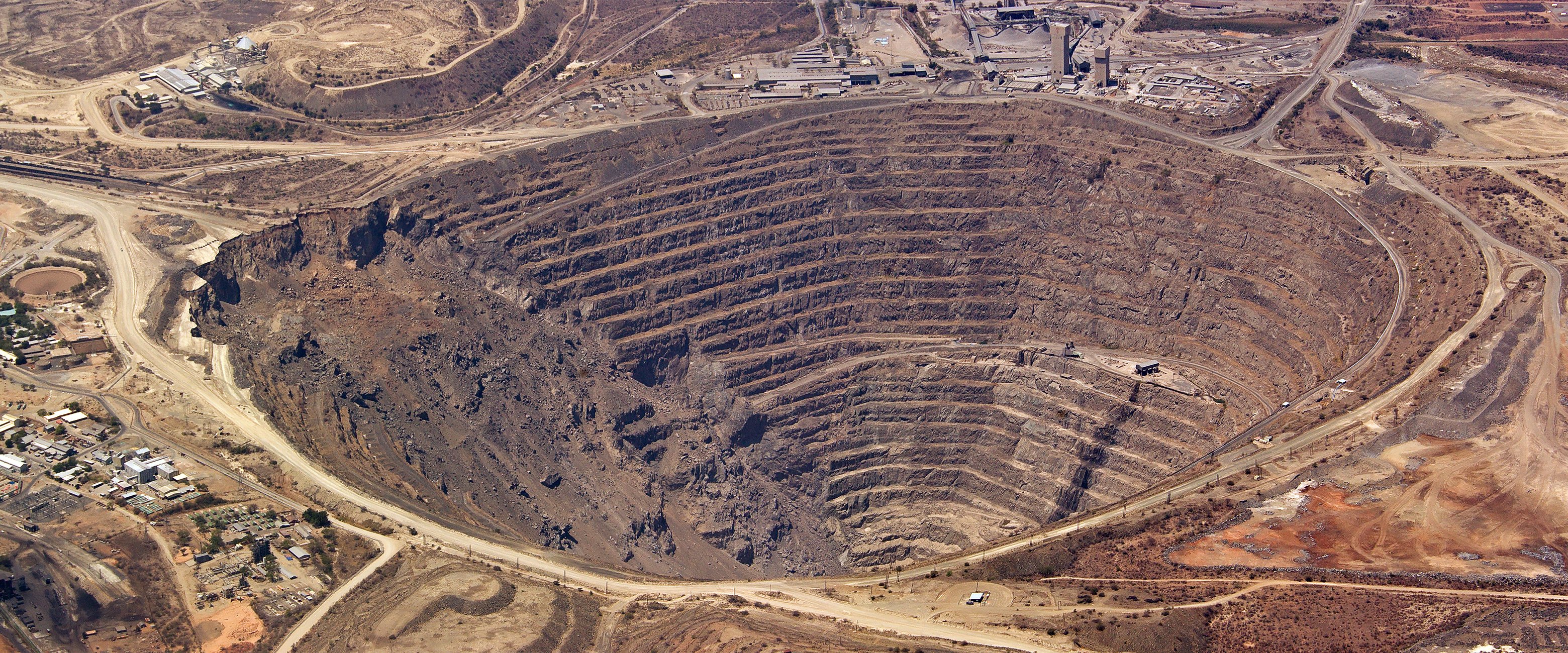
Lithium Mine – extracting a key element used in computing

The tech industry effectively deploys a degraded form of Platonic idealism (which places greater emphasis on our ideas of the world than the actually existing structure of the world itself). This idealism prevents us from thinking clearly about the industry’s activities and its role in, and impact on, global political economy (the interrelation of economic activity with social custom, legal frameworks, government, and power relations). One of the consequences of this idealist preoccupation is that, when we’re analyzing a press account of tech activities, for example, stories about autonomous cars, instead of interrogating the assumption that driverless vehicles are possible and inevitable, we base our analysis on an idealist claim, thereby going astray and inadvertently allowing our class adversaries to define the boundaries of discussion.

The answer to this idealism, and the propaganda crafted using it, is a materialist approach to tech industry analysis.

Materialism (also known as physicalism)

Let’s take a quote from the Stanford Encyclopedia of Philosophy

Physicalism is, in slogan form, the thesis that everything is physical. The thesis is usually intended as a metaphysical thesis, parallel to the thesis attributed to the ancient Greek philosopher Thales, that everything is water, or the idealism of the 18th Century philosopher Berkeley, that everything is mental. The general idea is that the nature of the actual world (i.e. the universe and everything in it) conforms to a certain condition, the condition of being physical. Of course, physicalists don’t deny that the world might contain many items that at first glance don’t seem physical — items of a biological, or psychological, or moral, or social, or mathematical nature. But they insist nevertheless that at the end of the day such items are physical, or at least bear an important relation to the physical.

Stanford Encyclopedia of Philosophy – https://plato.stanford.edu/entries/physicalism/

This blog is dedicated to ruthlessly rejecting tech industry idealism in favor of tracking the hard physicality and real-world impacts of computation in all of its flavors. In this sense, the focus is materialist. Key concerns include:

  • Investigating the functional, computational foundation of platforms, such as Apple’s walled garden and Facebook
  • Exploring the physical inputs into the computational layer and the associated costs (in ecological, political economy and societal impact terms)
  • Asking who, and what factors shape the creation and deployment of software at-scale – i.e., what is the relationship between software and power

This blog’s analytical foundation is unequivocally Marxist and seeks to employ Marx and Engel’s grounding of Hegelian dialectics (an ongoing project, subject to endless refinement as understanding improves):

Marx’s criticism of Hegel asserts that Hegel’s dialectics go astray by dealing with ideas, with the human mind. Hegel’s dialectic, Marx says, inappropriately concerns “the process of the human brain”; it focuses on ideas. Hegel’s thought is in fact sometimes called dialectical idealism, and Hegel himself is counted among a number of other philosophers known as the German idealists. Marx, on the contrary, believed that dialectics should deal not with the mental world of ideas but with “the material world”, the world of production and other economic activity.[19] For Marx, a contradiction can be solved by a desperate struggle to change the social world. This was a very important transformation because it allowed him to move dialectics out of the contextual subject of philosophy and into the study of social relations based on the material world.

Wikipedia “Dialectical Materialism” – https://en.wikipedia.org/wiki/Dialectical_materialism

This blog is, therefore, dedicated to finding ways to apply the Marx/Engels conceptualization of materialism to the tech industry.

Conclusion

When I started my technology career, almost 20 years ago, like most of my colleagues, I was an excited idealist (in both the gee whiz and philosophical senses of the term) who viewed this burgeoning industry as breaking old power structures and creating newer, freer relationships (many of us, for example, really thought Linux was going to shatter corporate power just as some today think ‘AI’ is a liberatory research program).

This was an understandable delusion, the result of youthful enthusiasm but also, the hegemonic ideas of that time. These ideas – of freedom, ‘innovation’ and creativity are still deployed today but like crumbling Roman ruins, are only a shadow of their former glory.

The loss of dreams can lead to despair, but, to paraphrase Einstein, if we look deeply into the structures of things as they are, instead of as we want them to be, instead of despair, we can feel a new type of invigoration, the falling away of childlike notions and a proper identification of enemies and friends.

A materialist approach to the tech industry removes the blinders from one’s eyes and reveals the full landscape.

AI Supercomputers, An Inquiry

When I was young, the word, ‘supercomputer’ evoked images of powerful, intelligent systems, filling the cavities of mountains with their humming electronic menace.

Science fiction encouraged this view, which is as far from the (still impressive, yet grounded) reality of supercomputing as the Earth is from some distant galaxy. The distance between marketing hype and actually existing machines is like that: vast and unbridgeable, except in dreams.

Which brings me to this Verge story, posted on 24 January, 2022:

Social media conglomerate Meta is the latest tech company to build an “AI supercomputer” — a high-speed computer designed specifically to train machine learning systems. The company says its new AI Research SuperCluster, or RSC, is already among the fastest machines of its type and, when complete in mid-2022, will be the world’s fastest.

“Meta has developed what we believe is the world’s fastest AI supercomputer,” said Meta CEO Mark Zuckerberg in a statement. “We’re calling it RSC for AI Research SuperCluster and it’ll be complete later this year.”

Verge: https://www.theverge.com/2022/1/24/22898651/meta-artificial-intelligence-ai-supercomputer-rsc-2022

The phrase, “AI supercomputer” is obviously designed to sell the idea that this supercomputer, unlike others, is optimized for AI. And to give the devil his due, the fact it’s reportedly composed of NVIDIA game processing units, which, since the mid 2000’s have found extensive use powering tasks such as building large language models, gives some amount of credibility to the claim.

Some, but not as much as it might seem. Consider this hyperventilating article:

“Mind boggling”

This is clearly the tone Meta (and others) is hoping to cultivate via the use of ‘AI supercomputer’ as a descriptor. The assumption is that if enough computational power is thrown at the task of building machine learning models, those models will, in some not sharply defined way, reach unprecedented heights of…well, one isn’t sure.

Are ever larger machine learning models a sure indicator of remarkable progress? Two papers, “On the Dangers of Stochastic Parrots: Can Language Models Be Too Big?” and “No News is Good News: A Critique of the One Billion Word Benchmark” suggest the answer is no. These papers are focused on Natural Language Processing (NLP) models and it’s suggested that Meta will be building models for its Second Life warmed over ‘Metaverse’ effort. Even so, there appears to be a point at which ever larger models fail to produce hoped for results.

Supercomputers: Our Old Drinking Buddies

Schematic of Typical Supercomputing Infrastructure from ResearchGate

The category, ‘supercomputer’, created to describe a class of tightly integrated, high performance computational platforms, has existed for over 60 years. The first supercomputers were developed for nuclear research (weapons and energy) at Lawrence Livermore Labs in the US at the height of the Cold War (maybe we should call it Cold War Classic) and have also been applied to demanding tasks such as modeling the Earth’s climate. It’s a venerable technology with clearly defined parameters such as the use of symmetric multiprocessing. In all these decades, no supercomputer has managed to exhibit intelligence or plot our demise, except in fiction.

Adding ‘AI’ to the mix doesn’t change that reality since ever larger statistical pattern matching techniques do not cognition make. Oh and Meta’s claim is that these types of supercomputing data centers will, in addition to serving as development platforms, also host the haunted cartoon castle they call the “Metaverse’.

Considering this statement from Intel we have reason to doubt this too.

On Niceness as a Tactical Failure

Attentive readers will note that this blog is primarily focused on dissecting and highlighting the political economy and social impact of what’s called ‘Artificial Intelligence’ and allied fields (such as supposedly autonomous robots).

Till now, crypto, in all its fetidness, has escaped comment on these virtual pages. Well, ‘needs must’ as the old saying goes: the increasingly loud chorus of people – some of whom are well-intentioned techies – either singing the praises of crypto, NFTs, web3 etc. or, offering a lukewarm response to the threat this poses of, ‘something good might happen’ compels me to put fingers to keyboard.

More precisely though, this thread on Twitter provided the framework for a proper response:

In contrast to Marco’s clear declaration, which reflects my own view, there was this thread, in which Anil Dash presented the idea that, even though there are lots of ‘bad people’ involved in the space, there are also good people and these good people are trying to carve out a good space (for, in this case, artists using NFTs):

One of the most common maladies of our age is a belief – more appropriate in children than adults – that the problem with societies is the presence of ‘bad people’ who, being bad, spend their time, like villians in a Bond movie, imagining bad things to do and not as a function or emergent property of the society itself that enables these bad people. Normally, I’d insert a bit about the materialist analysis of capitalism but I’ll let that go for a later post.

There’s a wealth of evidence that the entire point of the crypto space is the realization of libertarian fantasies – the removal of constraints that protect those who’re considered weak or foolish (no need for deposit guarantees, now there are smart contracts!).

The presence of people with good intentions in this space (whether as software developers, activists or what have you) only serves to provide visual cover for the grift; indeed, this is how grifts function: earnest people are required. You, an earnest person hoping to do good things, suppress your knowledge of all the problems – the fundamental, baked into the cake problems – thinking that your niceness is a tactic for change.

This is an abdication of, as Hannah Arendt put it, your duty to think.

It’s time for us to abandon niceness for a solid and consistent application of principle, openly state who our adversaries are and vigorously resist their propaganda.

The first step is to stop fooling ourselves that our niceness is a tactic.

Cloud Technology: A Quick(ish) Guide for the Left

[About ‘cloud’, you can also read a longer piece I wrote for Logic Magazine and an interview I gave for the Tech Won’t Save Us podcast]


The 7 Dec 2021 Amazon Web Services (or, AWS) ‘outage’ has brought the use of cloud computing generally, and the role of Amazon in the cloud computing market specifically, to the attention of a general, non-technical audience [btw, outage is in single quotes to appease the techies who’ll shout: it’s a global platform, it didn’t go down, there was a regional issue! and so on]

Outage, in the total sense, or not, the event impacted a large number of companies, many of which are global content providers such as Disney and Netflix, services such as Ring and even Amazon’s internal processes that utilize their computational infrastructure.

Before the cloud era, each of these companies might have made large investments in maintaining their own data centers to host the computers, storage and networking equipment required to host a Disney+ or HBOMAX platform. In the second decade of the 2000s (really gaining momentum around 2016) the use of at first, Amazon Web Services and then Microsoft’s Azure and Google’s Cloud Platform offered companies the ability to reduce – or even eliminate – the need to support a large technological infrastructure to fulfill the command and control functions computation provides for capitalist enterprises.

Computation, storage and database – the three building blocks of all complex platforms – are now available as a utility, consumable in a way, not entirely different from the consumption of electricity or water (an imperfect analogy since, depending on the type of cloud service used, more or less technical effort is required to tailor the utility portfolio to an organization’s needs).


What is Cloud Computing? What is it’s Political Economy? What are the Power Dynamics?

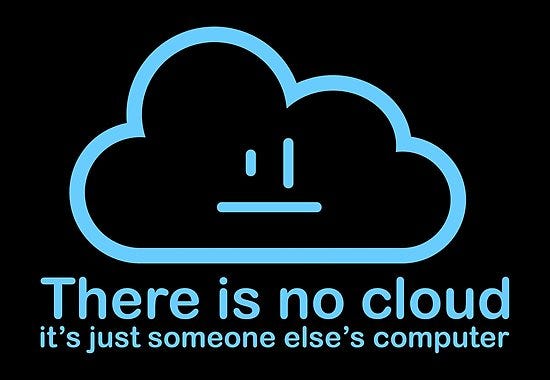
Popular Critical Meme from Earlier in the Cloud Era

A full consideration of the technical aspects of cloud computing would make this piece go from short(ish) to a full position paper (a topic addressed in the Logic Magazine essay I mentioned at the top). So, let’s answer the ‘what’ question by referring to what’s considered the urtext within the industry: the NIST definition of cloud computing

Cloud computing is a model for enabling ubiquitous, convenient, on-demand network access to a shared pool of configurable computing resources (e.g., networks, servers, storage, applications, and services) that can be rapidly provisioned and released with minimal management effort or service provider interaction. This cloud model is composed of five essential characteristics, three service models, and four deployment models.

https://csrc.nist.gov/publications/detail/sp/800-145/final

The NIST document goes on to define the foundational service types and behaviors:

  • SaaSSoftware as a Service (think Microsoft 365 or any of the other web-based, subscription services that stop working if your credit card is rejected)
  • PaaSPlatform as a Service (popular industry examples are databases such as Amazon’s DynamoDB, Azure SQL or Google Cloud SQL)
  • IaaSInfrastructure as a Service (commonly used to create what are called virtual machines – servers – on a cloud platform instead of within a system hosted by a company in their own data center)
  • On-demand Self Service (which means, instead of having to get on the phone to Amazon saying, ‘hey, can you create a database for me’ you can do it yourself using the tools available on the platform
  • Reserve Pooling – (basically, there are always resources available for you to use – this is a big deal because running out of available resources is a common problem for companies that roll their own systems)
  • Rapid Elasticity – (have you ever connected to a website, maybe for a bank and have it slow to a crawl or become unresponsive? That system is probably stressed by demand beyond its ability to respond. Elasticity is designed to solve this problem and it’s one of the key advantages of cloud platforms)
  • Measured Service – (usage determines cost which is a new development in information technology. Finance geeks – and moi! – call this OPEX or operational expense and you better believe that beyond providing a link I’m not getting into that now)

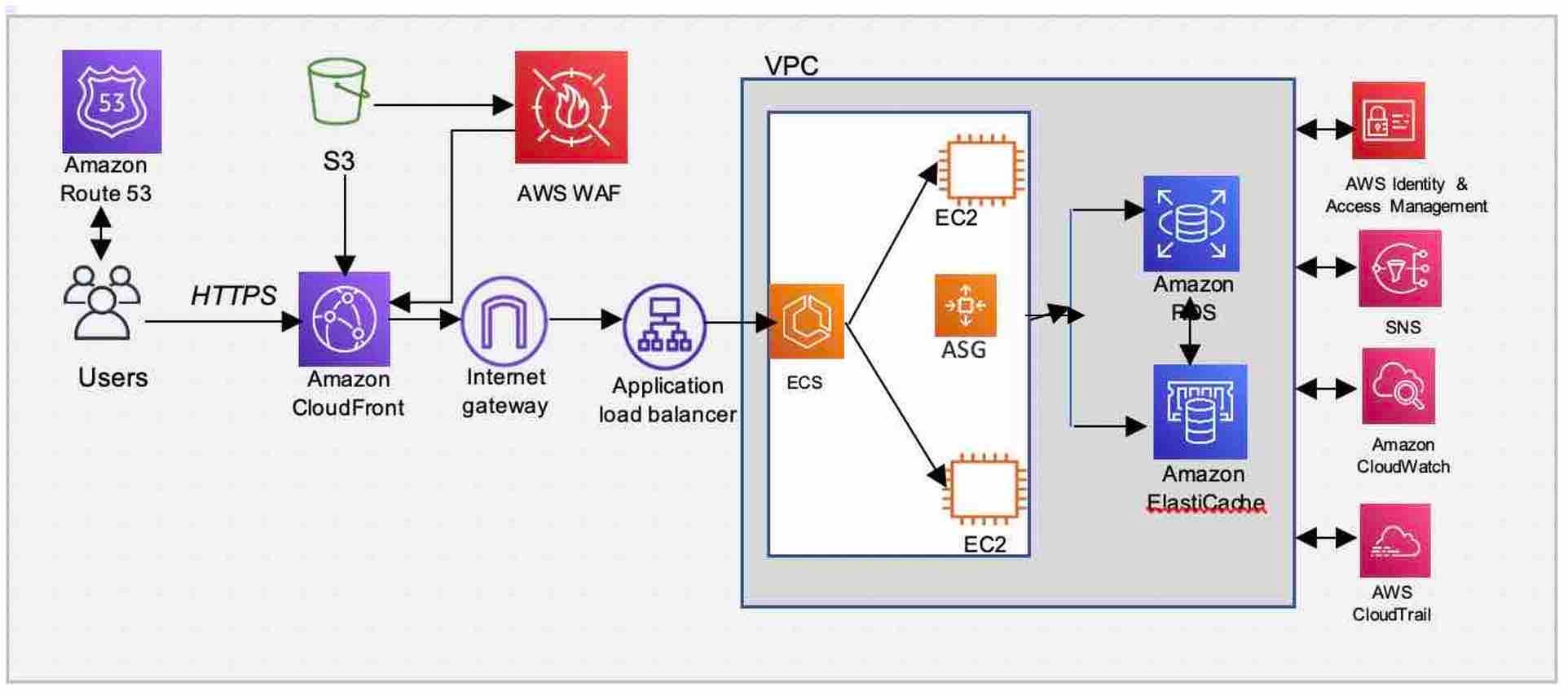
To provide a nice picture which I’m happy to describe in detail if you want (hit me up on Bluesky) here’s what a cloud architecture looks like (from the AWS reference architecture library):

AWS Content Analysis Reference Architecture

There are a lot of icons and technical terms in that visual which we don’t need to get into now (if you’re curious, here’s a link to the service catalog). The main takeaway is that with a cloud platform – in this case AWS but this is equally true of its competitors – it’s possible to assemble service elements into an architecture that performs a function (or many functions). Before the cloud era, this would have required ordering servers, installing them in data centers, keeping those systems cool and various other maintenance tasks that still occasionally give me nightmares from my glorious past.

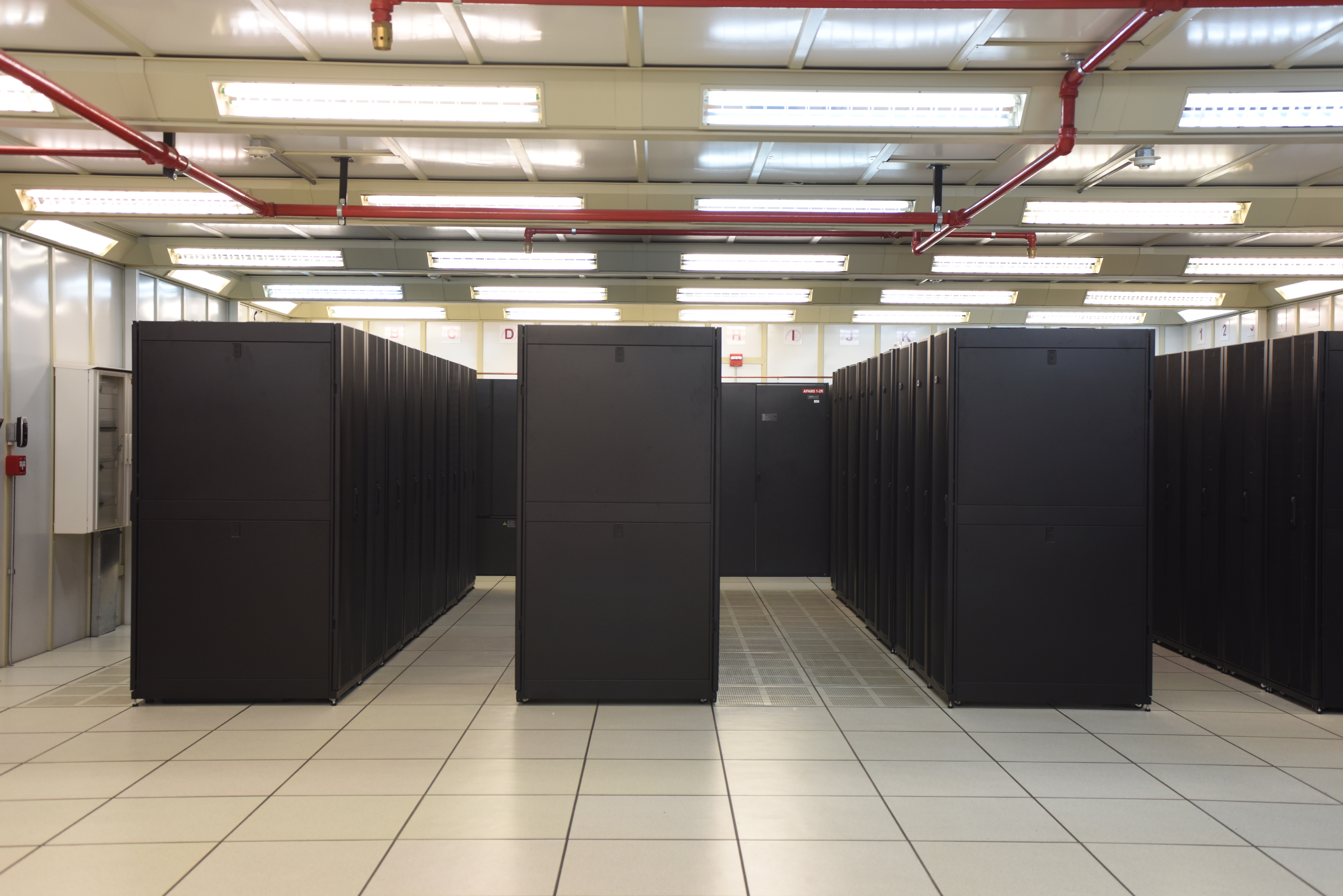
Check out this picture of a data center from Wikipedia. I know these spaces very well indeed:

Data Center (from Wikipedia)

And to be clear, just because these reference architectures exist (and can be deployed – or, installed ) that does not mean an organization is restricted to specific designs. There’s a toolbox from which you can pull what you need, designing custom solutions.

So, perhaps now you can understand why Disney, for example, when deciding to build a content delivery platform, chose to create it using a cloud platform – which enables rapid deployment and elastic response instead of creating their own infrastructure which they’d have to manage.

Of course, this comes with a price (and I’m not just talking about cash money).

Computer Power is Power and the Concentration of that Power is Hyper Power

Now we get to the meat of the argument which I’ll bullet point for clarity:

  • Computer power is power (indeed, it is one of the critical command and control elements of modern capitalist activity)
  • The concentration of computer power into fewer hands has both operational and political consequences (the operational consequences were on display during the 8 December AWS outage – yeah, I’m calling it an outage cloud partisans, deal)
  • The political consequences of the concentration of computer power is the creation of critical infrastructure in private hands – a super structure of technical capability that surrounds the power of other elements of capitalist relationships.

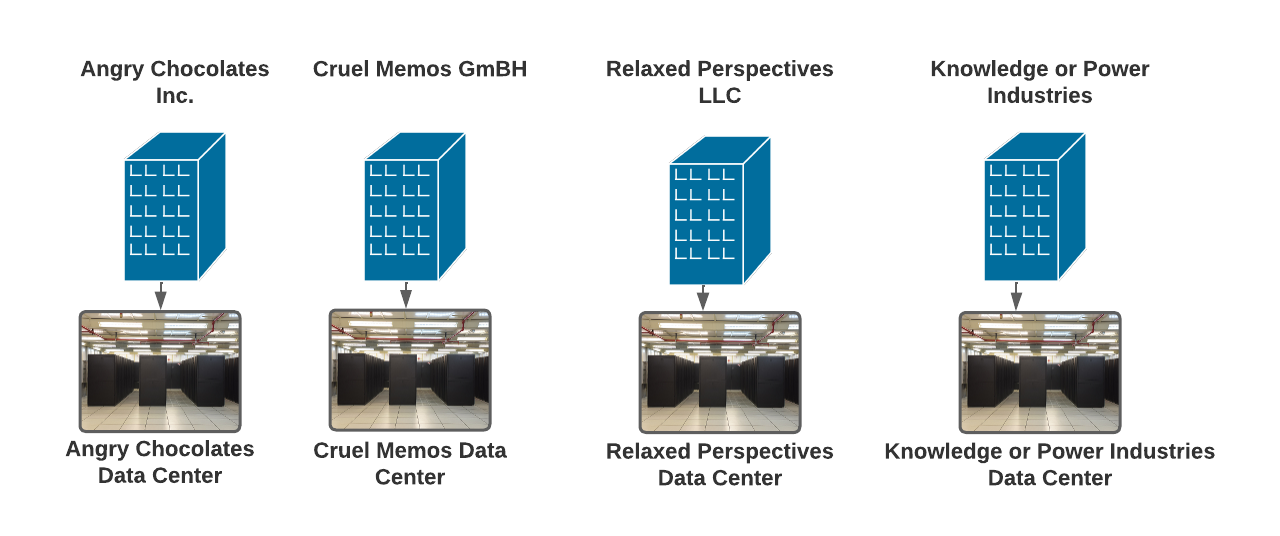
To illustrate what I mean, consider this simple diagram which shows how computer capacity has traditionally been distributed:

Note how every company, with its own data center, is a self-contained world of computing power. The cloud era introduces this situation:

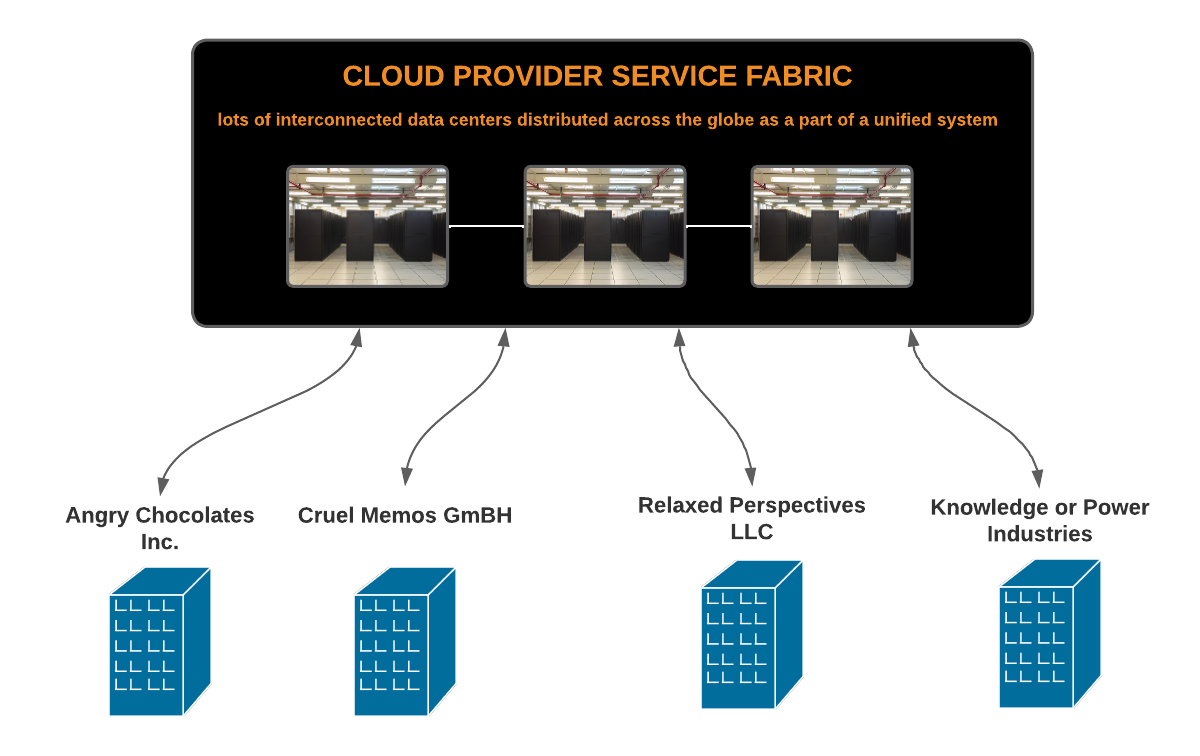
Note the common dependency on a service provider. The cloud savvy in the audience will now shout, in near unison: ‘but if organizations follow good architectural principles and distribute their workloads across regions within the same cloud provider for resiliency and fault tolerance (yes, we talk this way) there wouldn’t be an outage!’

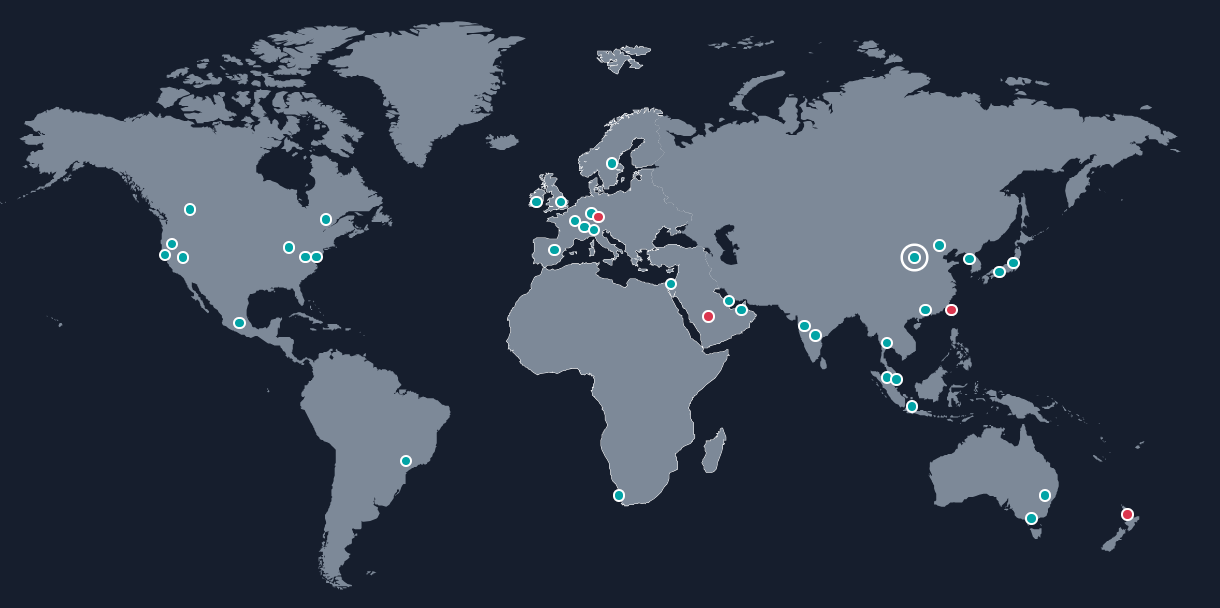
What they’re referring to is this:

AWS Global Infrastructure Map Showing (approximate) Data Center Locations

From a purely technical perspective, the possibility of minimizing (or perhaps even avoiding) service disruption by designing an application – for example, a streaming service – to come from a variety of infrastructural locations, while true, entirely misses the point…

Which is that the cloud era represents the shift of a key element of power from a broadly distributed collection of organizations to, increasingly, a few North American cloud providers.

This has broader implications which I explore in greater detail in my Logic Magazine piece.

UPDATE 11 Dec

Amazon has posted an explanation (which, in the industry is known as a root cause analysis) explaining the outage. I’ll be digging into this in detail soon.

The Psychoanalysis of Artificial Intelligence

This blog is dedicated to analyzing the field of ‘artificial intelligence’ specifically, and the tech industry generally from a materialist perspective.

By materialist perspective, I mean a point of view informed, in large measure by historical materialism but also, by a deep analysis of the nuts and bolts – the supply chains, extractive industrial activity, data centers and actually existing capabilities undergirding what the tech industry presents as magic.

There is however, another layer operating which is captured by, among other disciplines, psychoanalytic theory.

To explore this approach, I’ve been studying (‘reading’ is too light a word for it) ‘The Psychoanalysis of Artificial Intelligence‘ by Dr. Isabel Millar.

In this series of video meditations, I consider aspects of the book. This is an ongoing project and I’ll be updating this post as new videos are added.


Introduction:

Part Two:

Part Three:

Windows Vista as Neoliberal Instrument

Synopsis

Last night, before nodding off to sleep, a stray memory flitted across (or through?) my synapses; a posting I made to the Left Business Observer Listserv, titled “Windows Vista as Neoliberal Instrument”. This was, I think, my first attempt to merge my work in information technology with my (always in formation and never complete) Marxian approach to ways of thinking about that industry.

At the time of writing, over a decade ago, February of 2007, the release of Microsoft’s Windows Vista operating system was the source of a lot of debate and frustration. The OS wasn’t performing as hoped and techies were wondering why. It turned out that one of the key reasons was Microsoft’s attempt to enforce copyright via software. This proved to be a rich target for analysis and David Harvey’s ‘A Brief History of Neoliberalism’ provided a powerful analytical framework.  Also, this was a total flex.

Introduction

[content originally posted to LBOTalk February, 2007 some new formatting added]

In his most recent book, “A Brief History of Neoliberalism”, David Harvey analyzes the neoliberal turn that first Western, and later, practically every economy on Earth took to varying degrees of depth over the past 30 or so years. 

Several key features of neoliberalism are dissected:

1.) neoliberalism as a power restoration technique (i.e., restoring to capitalists the margin of power lost during the postwar years of high growth and detente with labor)

2.) neoliberalism as imperfect tool against stagnation and the problems of overproduction

and

3.) neoliberalism as a method for monetizing practices and spaces previously excluded from market concerns and controls

To properly understand the strategic concessions Microsoft made to the entertainment industry — concessions that led MSFT to deploy a software-based version of the Advanced Access Content System (AACS) in Windows Vista — you need to carefully consider that third aspect of neoliberalism.

What is AACS?

Briefly, the Advanced Access Content System is a platform, created at the behest of the entertainment industry, whose sole purpose is to enforce a (it is vainly hoped) completely uncrackable environment for “premium content” to flow through from player — device or software-based — to a display and/or audio output. Of course, the phrase “premium content” is a term of art inasmuch as the actual content might be anything from a slapdash teen sex comedy to the most subtle examples of musical or filmed art.

The motion picture and recording cartels have long been disturbed by the fact that people could record, remix and redistribute “content” at will. Over the years, many copy protection schemes have been tried; all have failed. Advances in computing power and storage capacity — moving in parallel with advances in cryptology — have finally made the old dream of an automated copyright enforcement system achievable.

Achievable, because under the AACS system, ‘intelligent’ hardware is constantly on the lookout for security breaches (for example, interceptions of the content data stream from player to output) and empowered, so to speak, to take action. What action? Well, action like actively preventing component outs from working if the HD-DVD or Blu ray disk you’re trying to view has been flagged as being compromised (or more specifically, if the cryptological “key” associated with the disk has been compromised, leading to your play privileges being ‘revoked’ by the key issuing authority).

All high definition hardware — players, digital sets, audio units — are designed to enforce this automated copyright infrastructure. Your HD-DVD or Blu Ray player will talk to your high def display over what are called High-Bandwidth Digital Content Protection compliant outputs. Together, they’ll ensure that RIAA and MPAA copyright concerns are being addressed wherever and whenever “premium content” is being viewed.

Rent Seeking via Operating System

Microsoft wanted Vista to be marketable as a media platform (and MSFT also wanted to create the de facto standard for software based AACS implementation) so they crafted a complex encryption/decryption methodology within the operating system that obeys — and then some — AACS rules. Doing so gave them negotiating space with the entertainment industry.

As any user of consumer electronics and Microsoft software knows, shit happens. The copyright enforcement, content monitoring and encryption/decryption technologies in next gen players and Vista are always on. This exacts a performance price from the devices (because our CPUs and memory are good, but not so good that they can effortlessly do both content presentation and advanced cryptological functions without exhibiting some problems at least some of the time) and especially from the software, which is very brittle and prone to malfunction.

But beyond the false piracy alarms, stuttering playbacks and other technical annoyances that are already being seen in the wild, there’s an overriding fact to keep in mind: AACS gives the entertainment industry the ability to treat the products you buy as leased objects, which can be (say, in a case of revocation resolution) the source for ever renewable revenue long after they were originally purchased.

It also creates a method for modularizing in unprecedented ways — and therefore monetizing — functions that were previously considered more or less all of a piece, such as playing and therefore viewing the disks you buy.

In order for this system to work as planned, all devices must comply with the AACS standard. The idea is to close all potential areas of escape. Eventually, perhaps after 5 to 15 years, the full magnitude of the lock-in will be in effect as older DVD and audio players are retired.

It’s been rumored that Hollywood and the RIAA are fully aware AACS is, despite all their efforts, eminently hackable, and that the true target of these new constraints are ordinary people who don’t have easy access to workarounds. 

The goal then, is to have a lever that can be pulled at any time to extract more income from “consumers”.

Links —-

A Brief History of Neoliberalism

https://global.oup.com/academic/product/a-brief-history-of-neoliberalism-9780199283279?cc=nl&lang=en&

High-Bandwidth Digital Content Protection

http://en.wikipedia.org/wiki/High-Bandwidth_Digital_Content_Protection

Advanced Access Content System

http://en.wikipedia.org/wiki/Advanced_Access_Content_System

A Cost Analysis of Windows Vista Content Protection

http://www.cs.auckland.ac.nz/~pgut001/pubs/vista_cost.html

Techno-Skepticism: A Tactical Skill

Techno-skepticism is a vital and necessary response to a world awash in self-promoting boosterism and the capitalist utilized ideologies of techno-optimism and techno-determinism.

To define terms, techno-optimism is the belief any proposed technology is possible and good. Optimists look to past examples of things that were once impossible which became possible – such as machine flight – and infer this tendency is universal.

Techno-determinism (which can be considered a species of determinism) builds on tech-optimism’s ideological framework by asserting not just possibility, but inevitability.

For example, a techno-optimist views a development such as ‘robot’ kitchens as being both positive and possible as presented – determinists assert there’s nothing to stop such a development: it’s inevitable and beyond resistance, like gravity.

Robotic Chef Marketing Video

Skepticism, correctly practiced, isn’t the denial of technological change or the reality of, or potential for, benefits from such change. Skepticism is remembering to ask three questions:

  • How does this work? A technical inspection
  • Is it possible as described? A feasibility interrogation

Consider, for example, Amazon’s failed drone delivery service, which Cory Doctorow analyzed here – As Doctorow describes, this idea was inexplicably taken seriously:

When Amazon announced “Prime Air,” a forthcoming drone delivery service, in 2016, there was a curious willingness on the part of the press – even the tech press – to take the promise of a sky full of delivery drones at face value.

This despite the obvious problems with such a scheme: the consequences of midair collisions, short battery life, overhead congestion, regulatory hurdles and more. Also despite the fact that delivery drones, like jetpacks, are really only practical as sfx in an sf movie.”

At the time this proposed service was announced, I read detailed analyses and excited Tweet threads about the supposed meaning of a bold new age of drone delivery. I noticed however, that simple questions regarding feasibility were rarely asked – optimism and determinism (with a good amount of self-interested boosterism in the mix) prevented a skeptical response

When you read about a technological system, such as delivery via drone, remembering to ask questions about function (the how), benefit (who’s promoting this and why) and feasibility (can this be done at all or as the promoters describe?) is a reliable way to avoid being fooled and knocked from delusion to delusion.

The Metaverse: A Brief Inquiry

Facebook’s plan to become a ‘Metaverse company‘ (and indeed, completely rebrand the company around this concept) has attracted a lot of comment in tech media and social media spaces.

This is unsurprising; both because the idea seems futuristic (being based on a science fiction confection introduced in Neal Stephenson’s dystopian 1992 novel ‘Snow Crash‘) and also, because the tech media space reports anything announced by a so-called FAANG company as if it’s marvelous and inevitable.

Let’s apply a bit of real-ness to this and use a materialist analysis to interrogate the idea of the ‘Metaverse’ (this is similar in theme to my inquiry into Boston Dynamics).


Light Detective Work and Logical Inference

Tech companies create an air of secrecy around projects such as FB’s Metaverse effort for competitive reasons but also, I’d argue, to obscure what is often merely the assembly of already existing elements into platforms. Mariana Mazzucato analyzes this tendency using the iPhone in her book, ‘The Entrepreneurial State‘.

Here’s how the iPhone’s elements are dissected in Mazzucato’s book:

A similar method can be applied to an analysis of FB’s Metaverse.

The Oculus platform and Facebook’s Ray Ban stories glasses provide sufficient information for some light detective work. No matter how secretive a company tries to be, its job postings, properly interpreted and supported by experience, provide a rich source of evidence for what an organization is doing.

Working on the assumption that the Metaverse will primarily consist of repurposed elements (and the fact everything depends on, and leads to data centers), I examined Oculus job postings and dissected their contents.

The main technical themes were:

  • Optics
  • Haptics
  • Tracking
  • Display
  • Computer vision
  • User experience
  • Audio
  • Perceptual psychology
  • Research Science
  • Mechanical Engineering
  • Electrical Engineering
  • Software Engineering
  • Networking
  • Server operations

Of course, it’s impossible to know the precise details of FB’s system topology without a reference architecture but experience leads me to think we can achieve a solid approximation (and data center dependency is an absolute certainty no matter what else may be going on).

What can we infer from this?


How Sustainable and Realizable Is the Metaverse Concept?

Although the tech press treats every industry pronouncement as an irrefutable prediction there’s precedent of lots of smoke but little to no fire (recall Amazon’s supposedly brilliant drone delivery service). According to some estimates, Facebook has over 2 billion active users. An effort to move all, or even a statistically significant portion of this user base to a platform that generates a virtual reality environment for, and ingests audio/visual data from, hundreds of millions of people means a massive investment in physical infrastructure – computers, network infrastructure, cooling systems and real estate to host this and other relevant equipment (to get a sense of the industrial and extractive elements of what’s called ‘the cloud’ I suggest Nathan Ensmenger’s essay ‘The Cloud is a Factory’).

It also means an increase in demands for data transfer over Internet. It’s easy to project system crashes, bad connections and other problems caused by scalability challenges. It’s fair to ask if, despite the hype, any of this is actually possible as described and if so, how reliable will it be?

Conclusion

There’s abundant evidence Facebook (or whatever it’ll call itself in a week) is a problem. The company’s role in a variety of destructive activities is well documented. For that reason alone, the ‘Metaverse’ push is immediately suspect. I think we can also conclude however, that it might not be achievable as advertised and may turn out to be, like so much else that emerges from Silicon Valley, an elaborate grift, dressed up as a bold vision of the future.

We should recall that in the novel that gave the project its name, the ‘Metaverse’ is the last refuge for people living in a collapsed world. In this case, we might get the collapse without even the warped comforts a virtual world is supposed to offer.

UPDATE (29 Oct)

On 28 October, Facebook announced it was rebranding as ‘Meta’ to reflect its focus on being a ‘metaverse’ company.

The keynote video presented a vision (such as it is) for what the ‘metaverse’ is supposed to be…eventually. Zuckerberg walks within a fully virtual environment, uses a virtual pop-up menu and zooms (virtually) into an environment creatively named “Space Room”.

Rebranding the company formerly known as Facebook as Meta is, in part, surely intended to breathe new life into a moribund platform and distract attention away from the many negative associations Facebook has earned. Even so, we can predict that within the company, there will be efforts to make as much of this notion real as possible – despite the fact promoted elements (such as an environment you can walk through as if it’s real) are thoroughly impossible and likely to remain so for quite some time – indeed, some would require a multitude of breakthroughs in foundational sciences such as physics.

This means that the situation for Meta workers will become more difficult as they’re pushed to do things that simply cannot be achieved.


UPDATE (16 DEC)

On 14 December, Intel’s Senior vice president, General manager of the Accelerated Computing Systems and Graphics Group, Raja Koduri, published this paper which supports my assertion that the ‘Metaverse’ (it pains me to use that term, which describes nothing and is made of hype) will require orders of magnitude more computing capacity than currently available.

Here’s a key quote:

Consider what is required to put two individuals in a social setting in an entirely virtual environment: convincing and detailed avatars with realistic clothing, hair and skin tones – all rendered in real time and based on sensor data capturing real world 3D objects, gestures, audio and much more; data transfer at super high bandwidths and extremely low latencies; and a persistent model of the environment, which may contain both real and simulated elements. Now, imagine solving this problem at scale – for hundreds of millions of users simultaneously – and you will quickly realize that our computing, storage and networking infrastructure today is simply not enough to enable this vision.

We need several orders of magnitude more powerful computing capability, accessible at much lower latencies across a multitude of device form factors. To enable these capabilities at scale, the entire plumbing of the internet will need major upgrades. Intel’s building blocks for metaverses can be summarized into three layers and we have been hard at work in several critical areas.

Intel: https://download.intel.com/newsroom/archive/2025/en-us-2021-12-14-powering-the-metaverse.pdf

Of course, this can be interpreted as self-serving for Intel which stands to benefit (to say the least) from a massive investment in new computing gear. That doesn’t negate the insight, which is based on hard material reality.

What’s Behind the Explosion of AI?

Synopsis

The spread of AI (algorithmic) harms such as automated recidivism and benefits determination systems has been accelerated by the cloud era which has made the proliferation of algorithmic automation possible; indeed, the companies providing cloud services promote their role as accelerators. 

Background 

We are witnessing a significant change in the way computing power is used and engineered by public and private organizations. The material basis of this change is the availability of utility services such as on-demand compute, storage and database offered primarily by Amazon (with its Amazon Web Services platform), Microsoft (Azure) and Google (Google Cloud Platform). There are other platforms, such as Alibaba, based in the PRC but those three Silicon Valley giants dominate the space. This has come to be known as ‘public cloud’ to distinguish it as a category from private data centers. The term is misleading; ‘public cloud’ is a privately owned service, sold to customers via the public Internet. 

 ‘Public Cloud’ services make it possible for government agencies and businesses to reduce – or eliminate – the work of hosting and maintaining their own computational infrastructure within expensive data centers. Although the advantages seem obvious (for example, reduced overhead and the ability to focus on the use of computer power for business and government goals rather than the costly, complex, time-consuming and often error-prone task of systems engineering) there are also serious new challenges which are having an impact on US, and global, political economy. 

Impact

The rise of unregulated ‘public cloud’ has made the broad and rapid spread of algorithmic harms possible – via, for example, platform machine learning services such as Amazon Sagemaker and Microsoft Cognitive Services.  

The relationship can be visualized:

There’s a potent combination of: 

  • The lack of regulation 
  • The lowered barrier to entry made possible by ‘public cloud’ algorithmic utility services 
  • The marketing value (supported by AI hype) of creating and promoting a product and/or service as based on ‘AI’ (as labor reducing, or even eliminating, automation) 

This combination is producing an explosion of algorithmic platforms which are having a direct, negative impact on the lives of millions – notably the poor and people of color but rapidly spreading to all sectors of the population. My position is that this expansion is materially supported by cloud platforms and a lack of public oversight. 

Pointillistic But Useful: A Machine Learning Object Lesson

I devote a lot of time to understanding, critiquing and criticizing the AI Industrial Complex. Although much – perhaps most- of this sector’s output is absurd, or dangerous (AI reading emotions and automated benefits fraud determination being two such examples) there are examples of uses that are neither which we can learn from.

This post briefly reviews one such case.

During dinner with friends a few weeks ago, the topic of AI came up. No, it wasn’t shoehorned into an otherwise tech-free situation; one of the guests works with large-scale engineering systems and had some intriguing things to say about solid, real world, non-harmful uses for algorithmic ‘learning’ methods.

Specifically, he mentioned Siemens’ use of machine vision to automate the inspection of wind turbine blades via a platform called Hermes. This was a project he was significantly involved in and justifiably proud of. It provides an object lesson for the types of applications which can benefit people, rather than making life more difficult through algorithm.

You can view a (fluffy, but still informative) video about the system below:

Hermes System Promotional Video

A Productive Use of Machine Learning

The solution Siemens employed has several features which make it an ideal object lesson:

1.) It applies a ‘learning’ algorithm to a bounded problem

Siemens engineers know what a safely operating blade looks like; this provides a baseline against which variances can be found.

2.) It applies algorithms to a bounded problem area that generates a stream of dynamic, inbound data

The type of problem is within the narrow limits of what an algorithmic system can reasonably and safely handle and benefits from a robust stream of training data that can improve performance

3.) It’s modest in its goal but nonetheless important

Blade inspection is a critical task and very time consuming and tedious. Utilizing automation to increase accuracy and offload repeatable tasks is a perfect scenario.


How Is This Different from AI Hype?

AI hype is used to convince customers – and society as a whole – that algorithmic systems match, or exceed the capabilities of humans and other animals. Attempts to proctor students via machine vision to flag cheating, predict emotions or fully automate driving are examples of overreach (and the use of ‘AI’ as a behavioral control tool). I use ‘overreach‘ because current systems are, to quote Gary Marcus in his paper The Next Decade in AI: Four Steps Towards Robust Artificial Intelligence‘, “pointillistic” – often quite good in narrow or ‘bounded’ situations (such as playing chess) but brittle and untrustworthy when applied to completely unbounded, real world circumstances such as driving, which is a series of ‘edge cases’.

Visualization of Marcus’ Critique of Current AI Systems

The Siemens example provides us with some of the building blocks of a solid doctrine to use when evaluating ‘AI’ systems (and claims about those systems) and a lesson that can be transferred to non-corporate uses.