Marlowe in Silicon Valley: On Tech Industry Critique

A few years ago, I started this very blog, devoted, as the subtitle reads, to  “AI industry analysis without hype and techbro-ism.” Writing, when seriously pursued (whether money is exchanged or not) is a demanding activity, requiring time and often, a reduced number of social interactions, things that are becoming ever scarcer in our decaying world of enforced busy-ness and endlessly distracting ‘discourse.’

Considering the difficulty, why bother writing? And why bother writing about the tech industry generally, and its so-called ‘AI’ incarnation specifically? Until very (very) recently, the unchallenged cultural consensus was that Silicon Valley is populated by a wondrous horde of luminous creatures, the brilliant young who, armed only with wafer thin laptops, dreams, and that sorcerer’s wand, code, were building a vibrant future of robot taxis, chatbot friends and virtual worlds filled with business meetings attended by cartoon dinosaur avatars.

Who could resist this vision, this nirvana of convenience? Well, as it happens, yours truly.

It was while watching a left-leaning (and at the time, supposedly Marxist) YouTube show that I realized there was an acute need for a pitiless, materialist critique of the tech industry. One of the show’s co-hosts opined that it would not be long before robot trucks replaced actual truckers, changing the political economy of logistics in the US. This is not remotely close to happening (as one of that program’s guests, a trucker, pointed out) and so, I wondered why this idea was asserted with the same confidence of a Tesla press release about full self-driving…happening, any day now.

The reason is a lack of understanding of how actually existing computational systems work. This isn’t a sin; the world is complex and we all can’t be experts in everything (though there’s a large army of men who assume they can, for example,  perform surgery, fly fighter jets and wrestle bears – the scientific term for such men is idiot).  As it happens, my decades of experience with computation, combined with an unequivocally Marxist (therefore, materialist) understanding of capitalism seemed to make me qualified to fill this niche from a unique perspective – not from the distance of academics but feeling the cold chill of data centers.

And so, I started this blog, a sisyphean effort, of unknown utility but necessary, if only to help me achieve some measure of clarity.

But, how to write about the tech industry? What ‘voice’, to lean on a cliche, should be used? In the beginning, I wrote like a war correspondent (or at least, what I supposed to be the attitude of a war correspondent) : urgent, sparse, accessibly technical. The enemy was clearly identified, the stark facts countering mythology plainly stated. There was no time for leisurely applied words. In an earlier age, when fedoras and smoking on planes were common, this might have been called a ‘muscular’ style (which evokes the image of a body builder, busily typing on a keyboard after leg day at the gym). I imagined myself in a smart, yet disheveled suit, sitting on-set with Dick Cavett in a forever 1969 Manhattan, a Norman Mailer of tech critique, though without the nasty obsession with performative manliness.

Something pulls at me, another ‘voice’ which has moved me, by degrees, away from reports from the front to an even sharper-edged approach, one informed by a combination of disdain for the target – an intrusive and destructive industry – and deep concern for its victims: all of us, nearly everywhere. This writing personna is closer to my day to day self – not a perfect mirror, but more recognizable.

This person at the keyboard, this version of Dwayne who tries to convey to you, esteemed reader, the true danger posed by the tech industry and the various illusions it promotes, is a man who refuses to be fooled or, at least, to walk into delusion willingly, without struggle.

Raymond Chandler in 1943

Now, as I write, my thoughts turn to an essay about detective fiction Raymond Chandler penned for The Atlantic magazine in 1950 titled, ‘The Simple Art of Murder.’ About writing, as a craft, Chandler wrote:

The poor writer is dishonest without knowing it, and the fairly good one can be dishonest because he doesn’t know what to be honest about.”

Honesty. This is the goal; an honest accounting of the situation we’re in and what we’re up against – capitalist political economy, supply chains, resources extraction and data centers as a form of sociotechnical power – a rejection of the Californian Ideology; no, not just a rejection, but a hard boiled reaction to it, a Noir response.

To close this, which is a work in progress, let’s return to Chandler’s essay about detective fiction, “The Simple Art of Murder” –

It is not a very fragrant world, but it is the world you live in, and certain writers with tough minds and a cool spirit of  detachment can make very interesting and even amusing patterns out of it. It is not funny that a man should be  killed, but it is sometimes funny that he should be killed for so little, and that his death should be the coin of what  we call civilization. All this still is not quite enough.”

The world itself may be lovely but the world the tech industry has built and which it seeks to entrench is ‘not very fragrant’ indeed; in fact, it is a nightmare. Resistance requires passion but also, as Chandler wrote of his fictional hero, Phillip Marlowe, a tough mind and cool spirit of detachment. No, I will not celebrate AI and each gyration of an industry whose goal is to act as the means through which labor’s power is suppressed.

Enough wide eyed belief; time for productive cynicism.

Magic is an Industrial Process, Belching Smoke and Fire: On GPUs

AT THE END of ´The Wizard of OZ´, Metro-Goldwyn-Mayer´s 1939-released, surrealist musical fantasy, our heroine Dorothy and her loyal comrades complete a long, arduous (but song filled) journey, finally reaching the fabled city of OZ. In OZ, according to a tunefully stated legend, there’s a wizard who possesses the power to grant any wish, no matter how outlandish. Dorothy, marooned in OZ, only wishes to return home and for her friends to receive their various hearts´ desire.

Who Dares Approach Silicon Valley!

As they cautiously approach the Wizard’s chamber, Dorothy and her friends are met with a display of light, flame and sound; ¨who dares!?¨ a deafening voice demands. It’s quite a show of apparent fury but illusion crumbles when it’s revealed (by Dorothy´s dog, Toto) that behind it all is a rather ordinary man, hidden on the other side of a velvet curtain, frantically pulling levers and spinning dials to keep the machinery powering the illusion going while shouting, “pay no attention to that man behind the curtain!

Behind the appearance of magic, there was a noisy industrial process, belching smoke. Instead of following the Wizard’s advice to pay no attention, let’s pay very close attention indeed to what lies behind appearances.


THERE’S AN INESCAPABLE MATERIALITY behind what’s called ‘AI’ deliberately obscured under a mountain of hype, flashy images and claims of impending ‘artificial general intelligence’ or ‘AGI’ as it’s known in sales brochures disguised as scientific papers.

At the heart of the success of techniques such as large language models, starting in the latter 2010s, is the graphics processing unit or GPU (in this essay about Meta´s OPT-175B, I provide an example of how GPUs are used). These devices use a parallel architecture, which enables greater performance than the general purpose processors used for your laptop; this vastly greater capability is the reason GPUs are commonly used for demanding applications such as games and now, the hyper-scale pattern matching behind so-called ´AI´ systems.

Typical GPU Architecture – ResearchGate

All of the celebrated feats of ‘AI’ – platforms such as Dall-E, GPT-3 and so on, are completely dependent on the use of some form of GPU, most likely provided by NVIDIA, the leading company in this space. OpenAI, a Microsoft partner, uses that company’s Azure cloud but within those ´cloud´ data centers, there are thousands upon thousands of GPUs, consuming power and requiring near constant monitoring to replace failed units.

GPUs are constructed as the result of a long and complex supply chain involving resource extraction, manufacturing, shipping and distribution; even a sales team.  ‘AI’ luminaries and their camp followers, the army of bloggers, podcasters and researchers who promote the field, routinely and self-indulgently debate a variety of esoteric topics (if you follow the ´AI´ topic on Twitter, for example, odds are you have observed and perhaps participated in these discussions about vague topics such as, ´the nature of intelligence´) but it’s GPUs and their dependencies all the way down

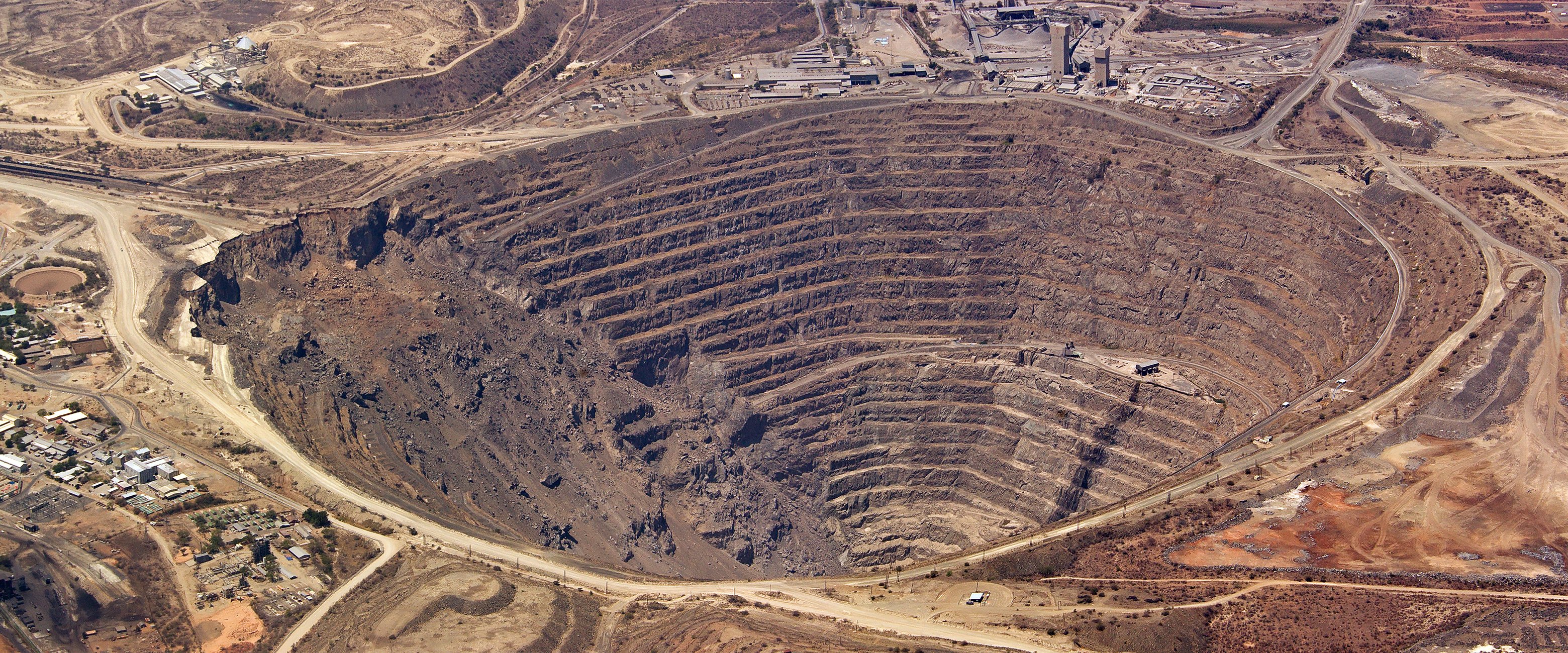
GPU raw and processed material inputs are aluminum, copper, clad laminates, glass, fibers, thermal silica gel, tantalum and tungsten. Every time an industry partisan tries to ‘AI’-splain the field, declaring it to be a form of magic, ignore their over-determination and confusion of feedback loops with cognition and think of those raw materials, ripped from the ground.

Aluminum mining

The ‘AI’ industrial complex is beset by two self-serving fantasies: 

1.) We are building intelligence 

2.) The supply chain feeding the industry is infinite and can ‘scale is all you need’ its way forever to a brave new world. 

For now, this industry has been able to keep the levers and dials moving,  but the amount of effort required will only grow as the uses to which this technology is put expand (Amazon alone seems determined to find as many ways to consume computational infrastructure as possible with a devil take the hindmost disregard for consequences), the need for processors grows and global supply chains are stressed by factors such as climate change, and geopolitical fragmentation.

The Wizards, out of tricks, curtains pulled, will be revealed as the ordinary (mostly) men they are. What comes next, will be up to us.

Some Key References:

Wizard of Oz

Dall-E

GPT-3

GPU Supply Chain

NIVIDIA

A Materialist Approach to the Tech Industry

[In this post, Monroe thinks aloud about his approach to analyzing the tech industry, a term which, annoyingly, is almost exclusively used to describe Silicon Valley based companies that use software to create rentier platforms and not, say, aerospace and materials science firms. The key concept is materialism.]


Few industries are as shrouded by mystification as the tech sector, defined as that segment of the industrial and economic system whose wealth and power have been built by acting as the unavoidable foundation of all other activity, by building rentier software-based platforms, shielded by copyright, that are difficult, indeed, impossible, to circumvent (an early example is the method Microsoft used to extract, via its monopoly position in corporate desktop software, what was called the ‘Microsoft or Windows tax‘).

Consider, as a contrasting example, a paper clip company: if it was named something self-consciously clever, such as Phase Metallics, it wouldn’t take long for most of us to see through this vainglory to say: ‘calm down, you make paper clips’.

An instinctual grounding of opinion, shaped and informed by the irrefutable physicality of things like paper clips, is lacking when we assess the claims of ‘tech’ companies. The reason is because the industry has successfully obscured, with a great deal of help from the tech press and media generally, the material basis of its activities. We use computers but do not see the supply chains that enable their production as machines. We use software but are encouraged to view software developers (or ‘engineers’, or ‘coders’) as akin to wizards and not people creating instruction sets.

Computers and software development are complex artifacts and tasks but not more complex than physics or civil engineering. We admire the architects, engineers and construction workers who design and build towering structures but, even though most of us don’t understand the details, we know these achievements have a physical, material basis and face limitations imposed by nature and our ability to work within natural constraints.

The tech sector presents itself as being outside of these limitations and most people, intimidated by insider jargon, the glamour of wealth and the twin delusions of techno-determinism (which posits a technological development as inevitable) and techno-optimism (which asserts there’s no limit to what can be achieved) are unable to effectively counter the dominant narrative.

Lithium Mine – extracting a key element used in computing

The tech industry effectively deploys a degraded form of Platonic idealism (which places greater emphasis on our ideas of the world than the actually existing structure of the world itself). This idealism prevents us from thinking clearly about the industry’s activities and its role in, and impact on, global political economy (the interrelation of economic activity with social custom, legal frameworks, government, and power relations). One of the consequences of this idealist preoccupation is that, when we’re analyzing a press account of tech activities, for example, stories about autonomous cars, instead of interrogating the assumption that driverless vehicles are possible and inevitable, we base our analysis on an idealist claim, thereby going astray and inadvertently allowing our class adversaries to define the boundaries of discussion.

The answer to this idealism, and the propaganda crafted using it, is a materialist approach to tech industry analysis.

Materialism (also known as physicalism)

Let’s take a quote from the Stanford Encyclopedia of Philosophy

Physicalism is, in slogan form, the thesis that everything is physical. The thesis is usually intended as a metaphysical thesis, parallel to the thesis attributed to the ancient Greek philosopher Thales, that everything is water, or the idealism of the 18th Century philosopher Berkeley, that everything is mental. The general idea is that the nature of the actual world (i.e. the universe and everything in it) conforms to a certain condition, the condition of being physical. Of course, physicalists don’t deny that the world might contain many items that at first glance don’t seem physical — items of a biological, or psychological, or moral, or social, or mathematical nature. But they insist nevertheless that at the end of the day such items are physical, or at least bear an important relation to the physical.

Stanford Encyclopedia of Philosophy – https://plato.stanford.edu/entries/physicalism/

This blog is dedicated to ruthlessly rejecting tech industry idealism in favor of tracking the hard physicality and real-world impacts of computation in all of its flavors. In this sense, the focus is materialist. Key concerns include:

  • Investigating the functional, computational foundation of platforms, such as Apple’s walled garden and Facebook
  • Exploring the physical inputs into the computational layer and the associated costs (in ecological, political economy and societal impact terms)
  • Asking who, and what factors shape the creation and deployment of software at-scale – i.e., what is the relationship between software and power

This blog’s analytical foundation is unequivocally Marxist and seeks to employ Marx and Engel’s grounding of Hegelian dialectics (an ongoing project, subject to endless refinement as understanding improves):

Marx’s criticism of Hegel asserts that Hegel’s dialectics go astray by dealing with ideas, with the human mind. Hegel’s dialectic, Marx says, inappropriately concerns “the process of the human brain”; it focuses on ideas. Hegel’s thought is in fact sometimes called dialectical idealism, and Hegel himself is counted among a number of other philosophers known as the German idealists. Marx, on the contrary, believed that dialectics should deal not with the mental world of ideas but with “the material world”, the world of production and other economic activity.[19] For Marx, a contradiction can be solved by a desperate struggle to change the social world. This was a very important transformation because it allowed him to move dialectics out of the contextual subject of philosophy and into the study of social relations based on the material world.

Wikipedia “Dialectical Materialism” – https://en.wikipedia.org/wiki/Dialectical_materialism

This blog is, therefore, dedicated to finding ways to apply the Marx/Engels conceptualization of materialism to the tech industry.

Conclusion

When I started my technology career, almost 20 years ago, like most of my colleagues, I was an excited idealist (in both the gee whiz and philosophical senses of the term) who viewed this burgeoning industry as breaking old power structures and creating newer, freer relationships (many of us, for example, really thought Linux was going to shatter corporate power just as some today think ‘AI’ is a liberatory research program).

This was an understandable delusion, the result of youthful enthusiasm but also, the hegemonic ideas of that time. These ideas – of freedom, ‘innovation’ and creativity are still deployed today but like crumbling Roman ruins, are only a shadow of their former glory.

The loss of dreams can lead to despair, but, to paraphrase Einstein, if we look deeply into the structures of things as they are, instead of as we want them to be, instead of despair, we can feel a new type of invigoration, the falling away of childlike notions and a proper identification of enemies and friends.

A materialist approach to the tech industry removes the blinders from one’s eyes and reveals the full landscape.