A Materialist Approach to the Tech Industry

[In this post, Monroe thinks aloud about his approach to analyzing the tech industry, a term which, annoyingly, is almost exclusively used to describe Silicon Valley based companies that use software to create rentier platforms and not, say, aerospace and materials science firms. The key concept is materialism.]


Few industries are as shrouded by mystification as the tech sector, defined as that segment of the industrial and economic system whose wealth and power have been built by acting as the unavoidable foundation of all other activity, by building rentier software-based platforms, shielded by copyright, that are difficult, indeed, impossible, to circumvent (an early example is the method Microsoft used to extract, via its monopoly position in corporate desktop software, what was called the ‘Microsoft or Windows tax‘).

Consider, as a contrasting example, a paper clip company: if it was named something self-consciously clever, such as Phase Metallics, it wouldn’t take long for most of us to see through this vainglory to say: ‘calm down, you make paper clips’.

An instinctual grounding of opinion, shaped and informed by the irrefutable physicality of things like paper clips, is lacking when we assess the claims of ‘tech’ companies. The reason is because the industry has successfully obscured, with a great deal of help from the tech press and media generally, the material basis of its activities. We use computers but do not see the supply chains that enable their production as machines. We use software but are encouraged to view software developers (or ‘engineers’, or ‘coders’) as akin to wizards and not people creating instruction sets.

Computers and software development are complex artifacts and tasks but not more complex than physics or civil engineering. We admire the architects, engineers and construction workers who design and build towering structures but, even though most of us don’t understand the details, we know these achievements have a physical, material basis and face limitations imposed by nature and our ability to work within natural constraints.

The tech sector presents itself as being outside of these limitations and most people, intimidated by insider jargon, the glamour of wealth and the twin delusions of techno-determinism (which posits a technological development as inevitable) and techno-optimism (which asserts there’s no limit to what can be achieved) are unable to effectively counter the dominant narrative.
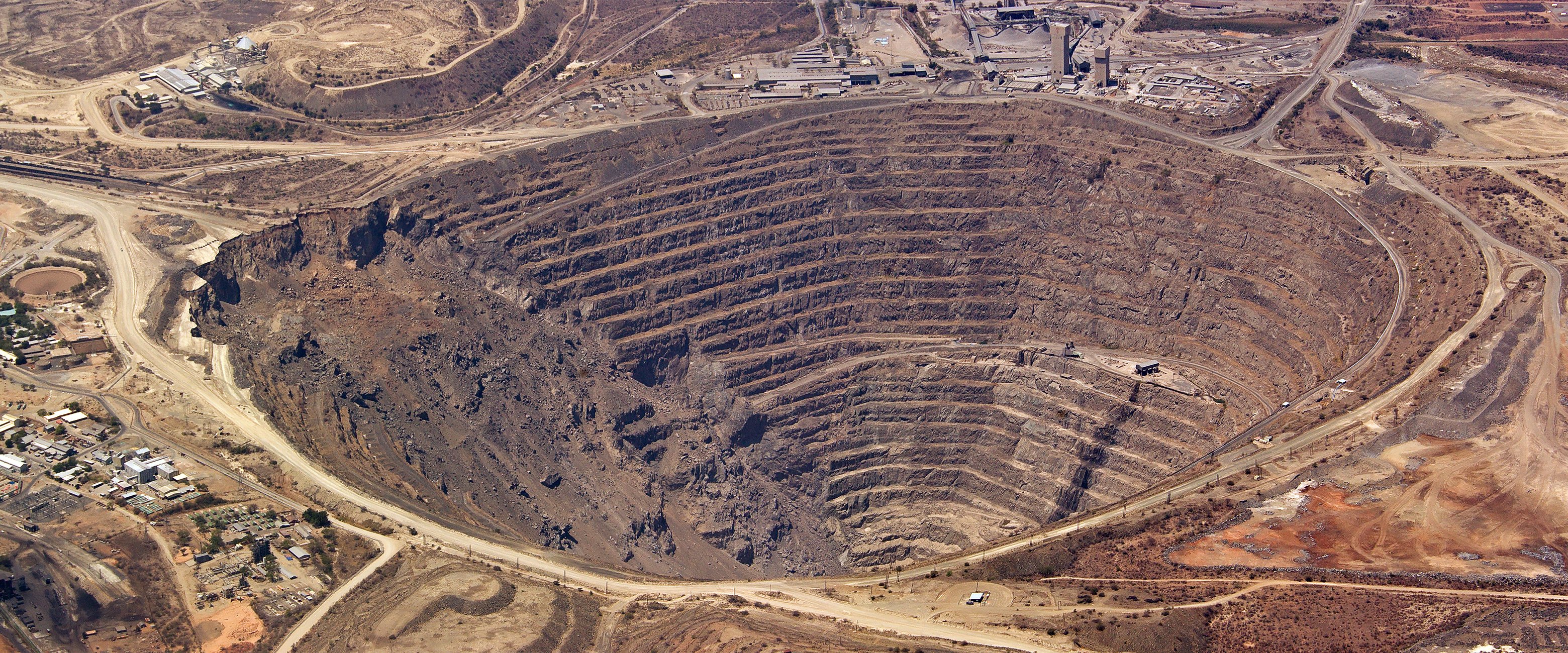
Lithium Mine – extracting a key element used in computing

The tech industry effectively deploys a degraded form of Platonic idealism (which places greater emphasis on our ideas of the world than the actually existing structure of the world itself). This idealism prevents us from thinking clearly about the industry’s activities and its role in, and impact on, global political economy (the interrelation of economic activity with social custom, legal frameworks, government, and power relations). One of the consequences of this idealist preoccupation is that, when we’re analyzing a press account of tech activities, for example, stories about autonomous cars, instead of interrogating the assumption that driverless vehicles are possible and inevitable, we base our analysis on an idealist claim, thereby going astray and inadvertently allowing our class adversaries to define the boundaries of discussion.

The answer to this idealism, and the propaganda crafted using it, is a materialist approach to tech industry analysis.

Materialism (also known as physicalism)

Let’s take a quote from the Stanford Encyclopedia of Philosophy

Physicalism is, in slogan form, the thesis that everything is physical. The thesis is usually intended as a metaphysical thesis, parallel to the thesis attributed to the ancient Greek philosopher Thales, that everything is water, or the idealism of the 18th Century philosopher Berkeley, that everything is mental. The general idea is that the nature of the actual world (i.e. the universe and everything in it) conforms to a certain condition, the condition of being physical. Of course, physicalists don’t deny that the world might contain many items that at first glance don’t seem physical — items of a biological, or psychological, or moral, or social, or mathematical nature. But they insist nevertheless that at the end of the day such items are physical, or at least bear an important relation to the physical.

Stanford Encyclopedia of Philosophy – https://plato.stanford.edu/entries/physicalism/

This blog is dedicated to ruthlessly rejecting tech industry idealism in favor of tracking the hard physicality and real-world impacts of computation in all of its flavors. In this sense, the focus is materialist. Key concerns include:

  • Investigating the functional, computational foundation of platforms, such as Apple’s walled garden and Facebook
  • Exploring the physical inputs into the computational layer and the associated costs (in ecological, political economy and societal impact terms)
  • Asking who, and what factors shape the creation and deployment of software at-scale – i.e., what is the relationship between software and power

This blog’s analytical foundation is unequivocally Marxist and seeks to employ Marx and Engel’s grounding of Hegelian dialectics (an ongoing project, subject to endless refinement as understanding improves):

Marx’s criticism of Hegel asserts that Hegel’s dialectics go astray by dealing with ideas, with the human mind. Hegel’s dialectic, Marx says, inappropriately concerns “the process of the human brain”; it focuses on ideas. Hegel’s thought is in fact sometimes called dialectical idealism, and Hegel himself is counted among a number of other philosophers known as the German idealists. Marx, on the contrary, believed that dialectics should deal not with the mental world of ideas but with “the material world”, the world of production and other economic activity.[19] For Marx, a contradiction can be solved by a desperate struggle to change the social world. This was a very important transformation because it allowed him to move dialectics out of the contextual subject of philosophy and into the study of social relations based on the material world.

Wikipedia “Dialectical Materialism” – https://en.wikipedia.org/wiki/Dialectical_materialism

This blog is, therefore, dedicated to finding ways to apply the Marx/Engels conceptualization of materialism to the tech industry.

Conclusion

When I started my technology career, almost 20 years ago, like most of my colleagues, I was an excited idealist (in both the gee whiz and philosophical senses of the term) who viewed this burgeoning industry as breaking old power structures and creating newer, freer relationships (many of us, for example, really thought Linux was going to shatter corporate power just as some today think ‘AI’ is a liberatory research program).

This was an understandable delusion, the result of youthful enthusiasm but also, the hegemonic ideas of that time. These ideas – of freedom, ‘innovation’ and creativity are still deployed today but like crumbling Roman ruins, are only a shadow of their former glory.

The loss of dreams can lead to despair, but, to paraphrase Einstein, if we look deeply into the structures of things as they are, instead of as we want them to be, instead of despair, we can feel a new type of invigoration, the falling away of childlike notions and a proper identification of enemies and friends.

A materialist approach to the tech industry removes the blinders from one’s eyes and reveals the full landscape.
Cloud Technology: A Quick(ish) Guide for the Left

[About ‘cloud’, you can also read a longer piece I wrote for Logic Magazine and an interview I gave for the Tech Won’t Save Us podcast]


The 7 Dec 2021 Amazon Web Services (or, AWS) ‘outage’ has brought the use of cloud computing generally, and the role of Amazon in the cloud computing market specifically, to the attention of a general, non-technical audience [btw, outage is in single quotes to appease the techies who’ll shout: it’s a global platform, it didn’t go down, there was a regional issue! and so on]

Outage, in the total sense, or not, the event impacted a large number of companies, many of which are global content providers such as Disney and Netflix, services such as Ring and even Amazon’s internal processes that utilize their computational infrastructure.

Before the cloud era, each of these companies might have made large investments in maintaining their own data centers to host the computers, storage and networking equipment required to host a Disney+ or HBOMAX platform. In the second decade of the 2000s (really gaining momentum around 2016) the use of at first, Amazon Web Services and then Microsoft’s Azure and Google’s Cloud Platform offered companies the ability to reduce – or even eliminate – the need to support a large technological infrastructure to fulfill the command and control functions computation provides for capitalist enterprises.

Computation, storage and database – the three building blocks of all complex platforms – are now available as a utility, consumable in a way, not entirely different from the consumption of electricity or water (an imperfect analogy since, depending on the type of cloud service used, more or less technical effort is required to tailor the utility portfolio to an organization’s needs).


What is Cloud Computing? What is it’s Political Economy? What are the Power Dynamics?

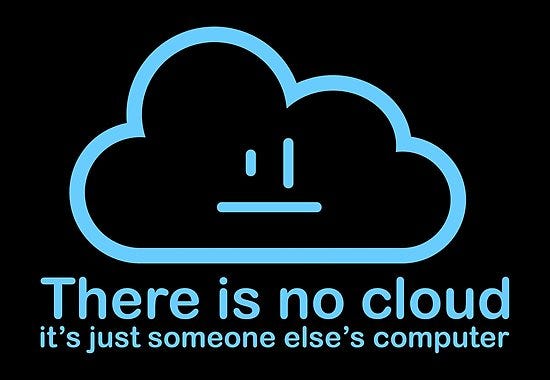
Popular Critical Meme from Earlier in the Cloud Era

A full consideration of the technical aspects of cloud computing would make this piece go from short(ish) to a full position paper (a topic addressed in the Logic Magazine essay I mentioned at the top). So, let’s answer the ‘what’ question by referring to what’s considered the urtext within the industry: the NIST definition of cloud computing

Cloud computing is a model for enabling ubiquitous, convenient, on-demand network access to a shared pool of configurable computing resources (e.g., networks, servers, storage, applications, and services) that can be rapidly provisioned and released with minimal management effort or service provider interaction. This cloud model is composed of five essential characteristics, three service models, and four deployment models.

https://csrc.nist.gov/publications/detail/sp/800-145/final

The NIST document goes on to define the foundational service types and behaviors:

  • SaaSSoftware as a Service (think Microsoft 365 or any of the other web-based, subscription services that stop working if your credit card is rejected)
  • PaaSPlatform as a Service (popular industry examples are databases such as Amazon’s DynamoDB, Azure SQL or Google Cloud SQL)
  • IaaSInfrastructure as a Service (commonly used to create what are called virtual machines – servers – on a cloud platform instead of within a system hosted by a company in their own data center)
  • On-demand Self Service (which means, instead of having to get on the phone to Amazon saying, ‘hey, can you create a database for me’ you can do it yourself using the tools available on the platform
  • Reserve Pooling – (basically, there are always resources available for you to use – this is a big deal because running out of available resources is a common problem for companies that roll their own systems)
  • Rapid Elasticity – (have you ever connected to a website, maybe for a bank and have it slow to a crawl or become unresponsive? That system is probably stressed by demand beyond its ability to respond. Elasticity is designed to solve this problem and it’s one of the key advantages of cloud platforms)
  • Measured Service – (usage determines cost which is a new development in information technology. Finance geeks – and moi! – call this OPEX or operational expense and you better believe that beyond providing a link I’m not getting into that now)

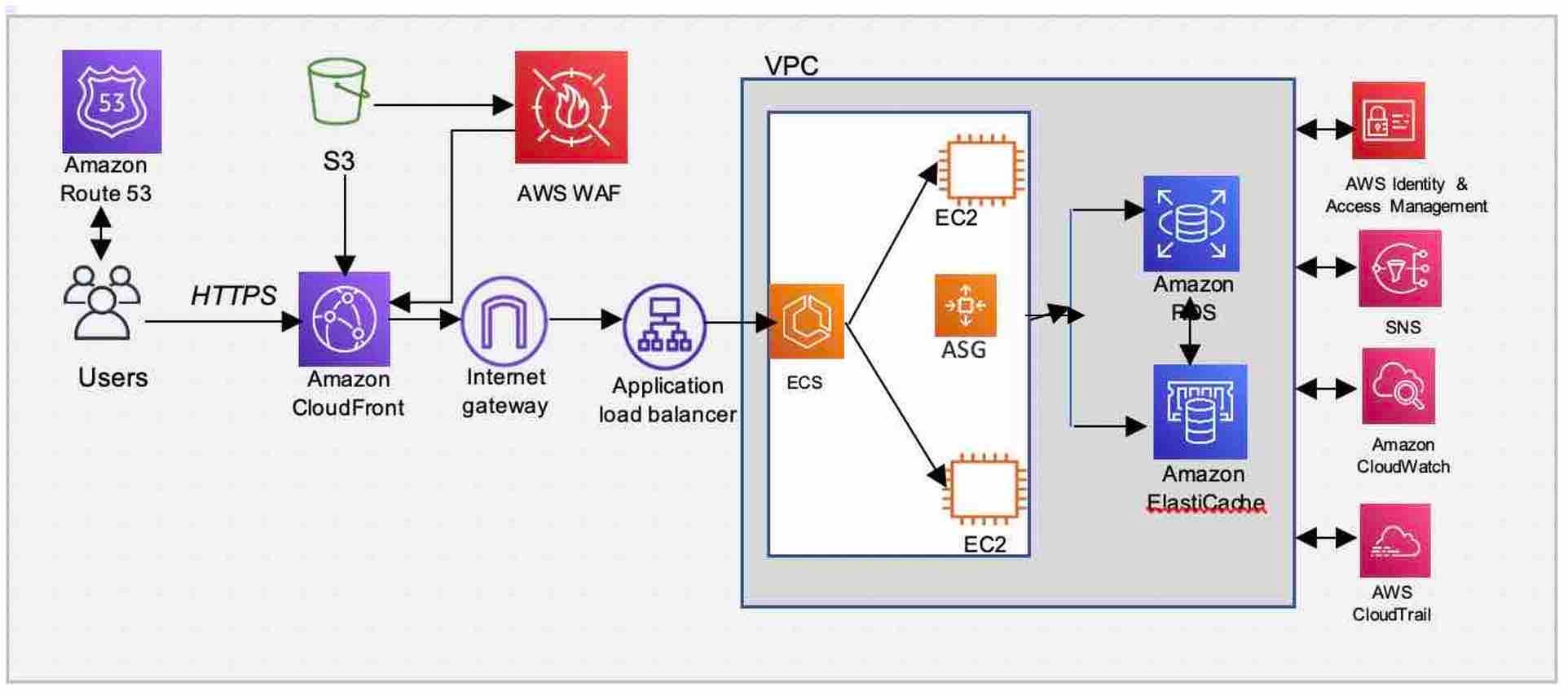
To provide a nice picture which I’m happy to describe in detail if you want (hit me up on Bluesky) here’s what a cloud architecture looks like (from the AWS reference architecture library):

AWS Content Analysis Reference Architecture

There are a lot of icons and technical terms in that visual which we don’t need to get into now (if you’re curious, here’s a link to the service catalog). The main takeaway is that with a cloud platform – in this case AWS but this is equally true of its competitors – it’s possible to assemble service elements into an architecture that performs a function (or many functions). Before the cloud era, this would have required ordering servers, installing them in data centers, keeping those systems cool and various other maintenance tasks that still occasionally give me nightmares from my glorious past.

Check out this picture of a data center from Wikipedia. I know these spaces very well indeed:

Data Center (from Wikipedia)

And to be clear, just because these reference architectures exist (and can be deployed – or, installed ) that does not mean an organization is restricted to specific designs. There’s a toolbox from which you can pull what you need, designing custom solutions.

So, perhaps now you can understand why Disney, for example, when deciding to build a content delivery platform, chose to create it using a cloud platform – which enables rapid deployment and elastic response instead of creating their own infrastructure which they’d have to manage.

Of course, this comes with a price (and I’m not just talking about cash money).

Computer Power is Power and the Concentration of that Power is Hyper Power

Now we get to the meat of the argument which I’ll bullet point for clarity:

  • Computer power is power (indeed, it is one of the critical command and control elements of modern capitalist activity)
  • The concentration of computer power into fewer hands has both operational and political consequences (the operational consequences were on display during the 8 December AWS outage – yeah, I’m calling it an outage cloud partisans, deal)
  • The political consequences of the concentration of computer power is the creation of critical infrastructure in private hands – a super structure of technical capability that surrounds the power of other elements of capitalist relationships.

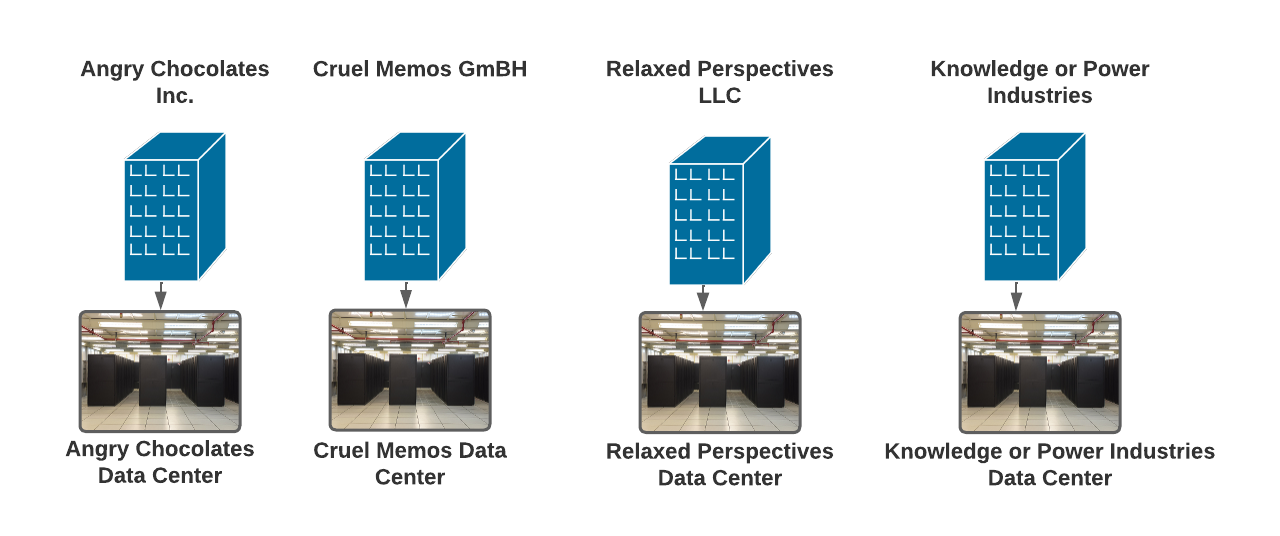
To illustrate what I mean, consider this simple diagram which shows how computer capacity has traditionally been distributed:

Note how every company, with its own data center, is a self-contained world of computing power. The cloud era introduces this situation:

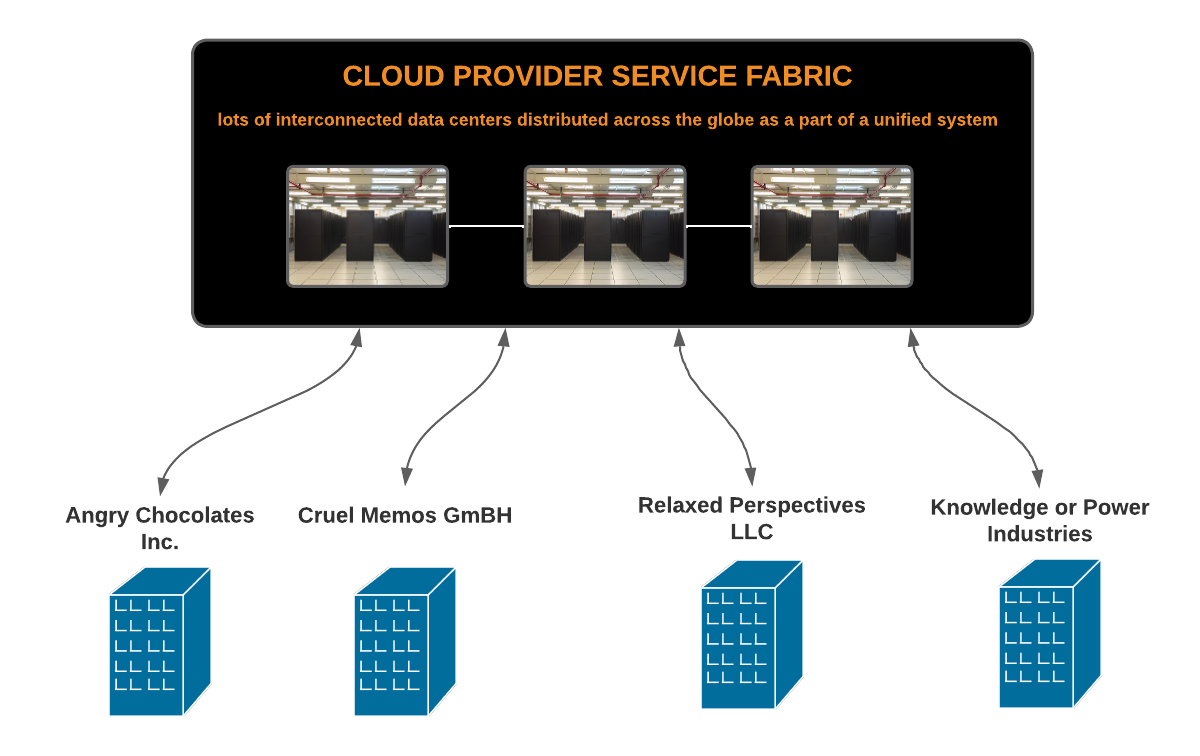
Note the common dependency on a service provider. The cloud savvy in the audience will now shout, in near unison: ‘but if organizations follow good architectural principles and distribute their workloads across regions within the same cloud provider for resiliency and fault tolerance (yes, we talk this way) there wouldn’t be an outage!’

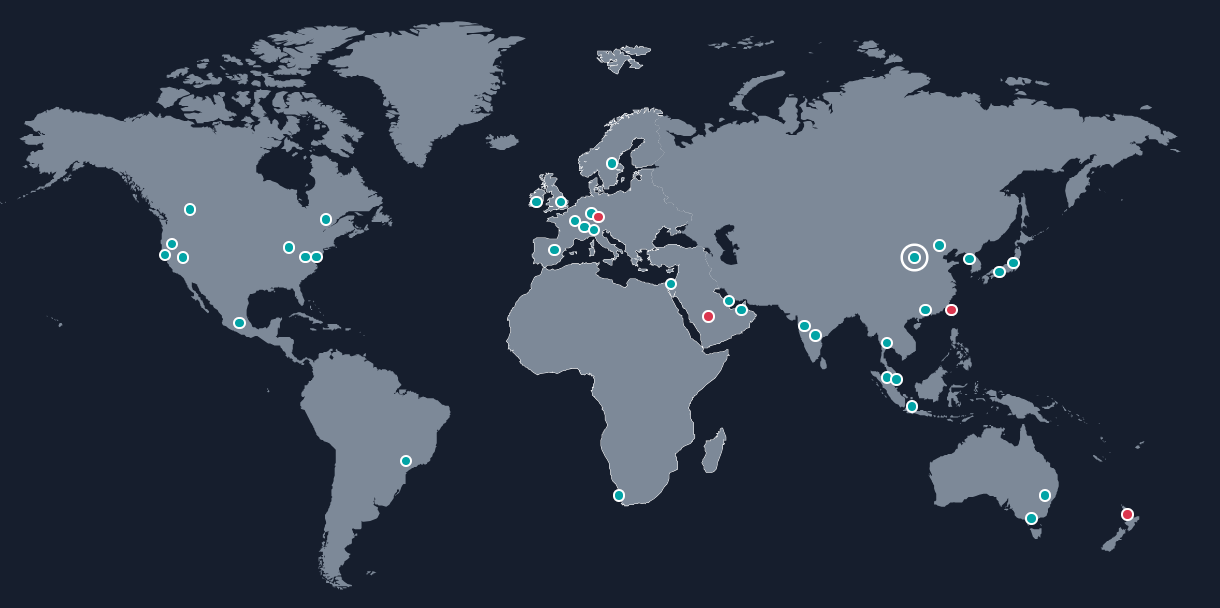
What they’re referring to is this:

AWS Global Infrastructure Map Showing (approximate) Data Center Locations

From a purely technical perspective, the possibility of minimizing (or perhaps even avoiding) service disruption by designing an application – for example, a streaming service – to come from a variety of infrastructural locations, while true, entirely misses the point…

Which is that the cloud era represents the shift of a key element of power from a broadly distributed collection of organizations to, increasingly, a few North American cloud providers.

This has broader implications which I explore in greater detail in my Logic Magazine piece.

UPDATE 11 Dec

Amazon has posted an explanation (which, in the industry is known as a root cause analysis) explaining the outage. I’ll be digging into this in detail soon.