
Bad ideas, like death, are inevitable and just as inescapable.
The US-based tech industry is a Pandora’s box of bad ideas, unleashed upon an unwilling and unwitting populace, and indeed world, with reckless abandon, scorching lives and the Earth itself. Never mind, they say, we’re building the future.
The latest bad idea to spread dark wings and take flight is that building a super massive data center for ‘AI’ called ‘Stargate’- a megamachine that will solve all our problems like a resource and real estate devouring Wizard of Oz – is not only good, but essential.
In an Associated Press article titled, ‘Trump highlights partnership investing $500 billion in AI‘ published Jan 23, 2025, the project is described:
WASHINGTON (AP) — President Donald Trump on Tuesday talked up a joint venture investing up to $500 billion for infrastructure tied to artificial intelligence by a new partnership formed by OpenAI, Oracle and SoftBank.
The new entity, Stargate, will start building out data centers and the electricity generation needed for the further development of the fast-evolving AI in Texas, according to the White House. The initial investment is expected to be $100 billion and could reach five times that sum.
“It’s big money and high quality people,” said Trump, adding that it’s “a resounding declaration of confidence in America’s potential” under his new administration.
[…]
It seems like only yesterday, or more precisely, several months ago, that the same ‘Stargate’, with a still astronomically large but comparatively smaller budget, was described in a Tom’s Hardware article of March 24, 2024 titled ‘OpenAI and Microsoft reportedly planning $100 billion datacenter project for an AI supercomputer‘ –
Microsoft and OpenAI are reportedly working on a massive datacenter to house an AI-focused supercomputer featuring millions of GPUs. The Information reports that the project could cost “in excess of $115 billion” and that the supercomputer, currently dubbed “Stargate” inside OpenAI, would be U.S.-based.
The report says that Microsoft would foot the bill for the datacenter, which could be “100 times more costly” than some of the biggest operating centers today. Stargate would be the largest in a string of datacenter projects the two companies hope to build in the next six years, and executives hope to have it running by 2028.
[…]
Bad ideas are inevitable but also, apparently, subject to cost overruns.
There are many ways to think and talk about this project, which is certain to fail (and there is news of far less costly methods, making the Olympian spending even more obviously suspicious). For me, the clearest way to understand the Stargate project and in fact, the entire ‘AI’ land grab, is as an attempt to create guaranteed profit for those tech firms who’re at the commanding heights – Microsoft, OpenAI, Amazon, Oracle and co-conspirators. Capital will flow into these firms whether the system works as advertised or not – i.e. they are paid for both function (such as it is) and malfunction.
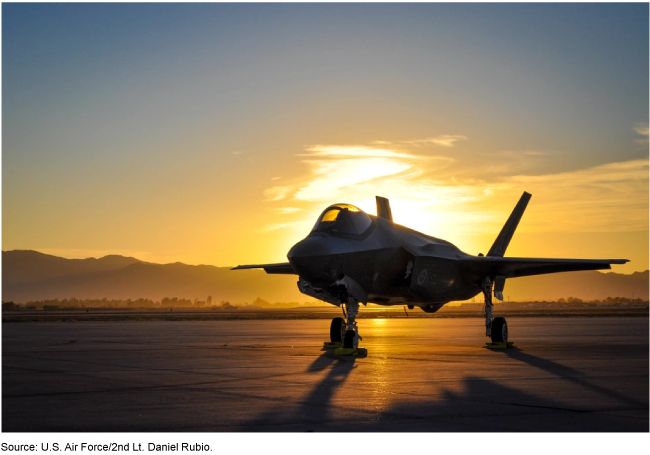
This isn’t a new technique. The US defense industry has a long history of stuffing its coffers with cash for delivering weapons systems that work… sometimes. The most infamous example is Lockheed’s F-35 fighter, a project that provides the company with funding for both delivery and correction as described in the US Government Accounting Office article, ‘F-35 Joint Strike Fighter: More Actions Needed to Explain Cost Growth and Support Engine Modernization Decision’ May 2023 –
The Department of Defense’s most expensive weapon system—the F-35 aircraft—is now more than a decade behind schedule and $183 billion over original cost estimates.
[…]
That’s a decade and 183 billion of sweet, steady profit, the sort of profit the tech industry has long sought. First there was ‘enterprise software’, then there was subscription-based cloud, both efforts to create ‘growth’ and dependable cash infusions. Now, with Stargate, the industry may have, at last, found its F-35. Unlike the troubled fighter plane, there won’t be any Tom Cruise films featuring the data center. Then again, perhaps there will be. Netflix, like the rest of the industry, is out of ideas.
 Computational Impacts