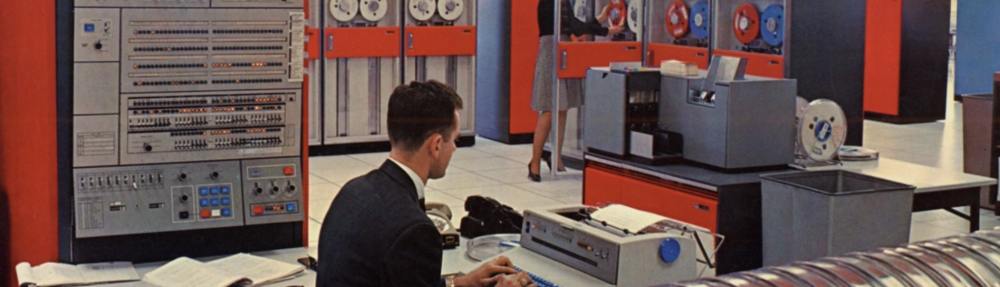
When we think about the tech industry, images of smoothly functioning machines, moving the world inexorably towards a brilliant future, may dance across your mind. This is no accident; the industry, since its birth in the 1990s (in its present form, deriving profits from software and the proliferation of software methods as broadly as possible) has cultivated and encouraged this view with the help of an uncritical tech press.
What’s lacking is a consideration and acknowledgement of the materialist aspects of the industry. By ‘materialist’ I’m referring to the nuts and bolts of how things work: the actual business of software and its place within political economy. Although the tech industry, with its flair for presentation and compliant press coverage, has successfully sold itself as fundamentally different from other economic sectors (say, coal mining) what it shares with all other forms of business activity within capitalism is an emphasis on profit as the only true goal. Once we re-center an understanding of profit as the objective, things that seem inexplicable or against a corporation’s ‘culture’ come into focus.
Which brings me to Microsoft and my new podcast.
For decades – almost since the company hit its near monopoly stride as an arbiter of desktop software used by companies large and small and consumers – I have worked with Microsoft technologies at what, in the industry, is called ‘at-scale’ for multinational companies across the globe. This has provided me with an understanding of two sides of a coin: how Microsoft works and how its software and other products are used by its corporate customers. From SQL Server databases for banks to Azure cloud hosted machine learning APIs used by so called AI start-ups, I have seen, and continue to see, if not all, a very broad swath.
This is the basis for an analysis of Microsoft from a materialist perspective. Capitalism, from this view, is not taken as a given but as a system which developed over time and was imposed upon the world. In this podcast, we will use Microsoft as the focal point for a review of the software aspect of this system in its present form. I hope you come along.
 Computational Impacts